9 Powerful Facts About G89.29 That Medical Providers Must Never Ignore
Medical coding accuracy plays a critical role in healthcare reimbursement, compliance, and patient care documentation. Among the many ICD-10 codes used by healthcare providers, g89.29 is one of the most frequently utilized codes associated with chronic pain management. Healthcare organizations, physicians, coders, and billing specialists must fully understand how to use g89.29 correctly to avoid claim denials, reimbursement delays, compliance risks, and documentation problems.
Chronic pain conditions affect millions of patients across the United States every year. These conditions often require ongoing treatment, specialist consultations, medication management, therapy services, and long-term monitoring. Proper use of g89.29 helps healthcare providers accurately document chronic pain conditions while supporting insurance reimbursement and medical necessity requirements.
At Icon Billing LLC, we understand the complexity of modern medical coding and revenue cycle management. Incorrect coding practices involving g89.29 can lead to audits, denied claims, delayed payments, and compliance concerns that negatively impact healthcare organizations financially and operationally.
This complete guide explains everything healthcare providers need to know about g89.29, including coding definitions, documentation requirements, reimbursement strategies, common billing mistakes, compliance considerations, and best practices for improving coding accuracy.
What Is G89.29?
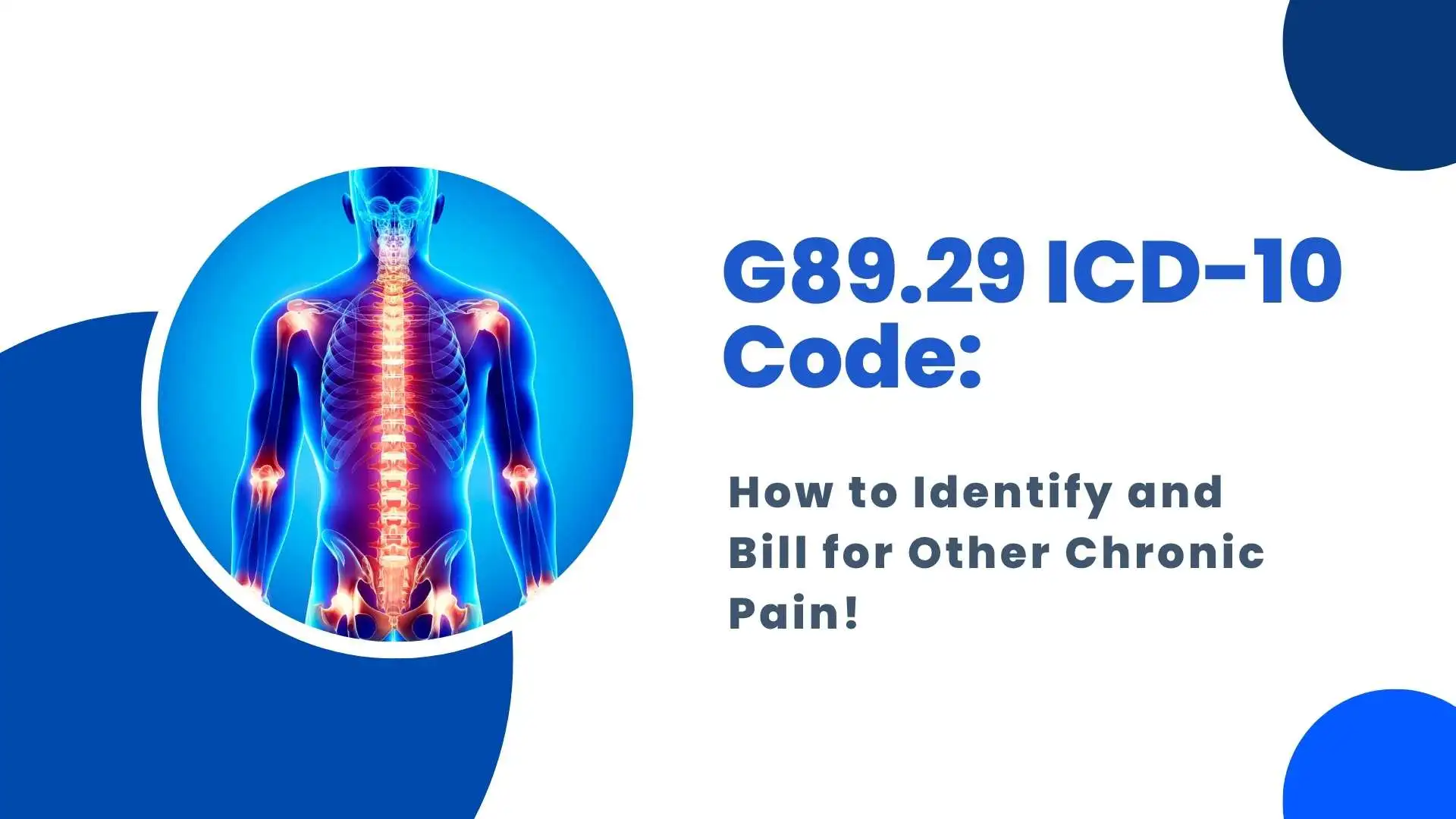
G89.29 is an ICD-10-CM diagnosis code used to describe “Other Chronic Pain.” The code falls under the broader category of chronic pain conditions managed within healthcare settings.
The Centers for Medicare & Medicaid Services and ICD-10 coding guidelines classify g89.29 as a code associated with chronic pain that does not fit more specific chronic pain classifications.
Healthcare providers commonly use g89.29 when documenting:
- Chronic musculoskeletal pain
- Long-term back pain
- Persistent joint pain
- Ongoing postoperative pain
- Generalized chronic pain conditions
- Chronic pain syndrome support documentation
The official ICD-10 coding system can be reviewed here:
ICD-10-CM Official Guidelines
Proper usage of g89.29 requires accurate documentation and clinical justification to support medical necessity and reimbursement compliance.
Why Accurate G89.29 Coding Matters
Medical coding errors can significantly impact healthcare organizations financially and legally. Incorrect use of g89.29 may result in denied claims, underpayments, compliance risks, or audit exposure.
Accurate coding matters because it supports:
Proper Reimbursement
Insurance companies rely on diagnosis codes like g89.29 to determine medical necessity and payment eligibility.
Clinical Documentation Accuracy
Coding helps maintain accurate patient health records.
Regulatory Compliance
Improper coding practices may violate payer guidelines and federal regulations.
Data Reporting
Healthcare organizations use coding data for reporting, quality metrics, and treatment planning.
Risk Reduction
Correct coding reduces the likelihood of audits and billing disputes.
Healthcare providers must understand when and how to apply g89.29 appropriately within medical records and billing systems.
Clinical Conditions Commonly Associated With G89.29
Healthcare providers may use g89.29 in several chronic pain scenarios when more specific diagnosis codes are unavailable or insufficient.
Common examples include:
Chronic Back Pain
Long-term spinal or lower back pain frequently requires chronic pain coding.
Persistent Joint Pain
Patients experiencing ongoing pain in knees, shoulders, or hips may qualify for g89.29 documentation.
Chronic Post-Surgical Pain
Some patients continue experiencing pain long after surgery recovery periods.
Neuropathic Pain Conditions
Certain nerve-related pain disorders may involve chronic pain management coding.
Chronic Musculoskeletal Disorders
Long-term pain associated with orthopedic conditions may support use of g89.29.
Accurate provider documentation is essential for proper diagnosis code selection and reimbursement justification.
Documentation Requirements for G89.29
Strong documentation remains one of the most important aspects of successful medical billing involving g89.29.
Healthcare providers should clearly document:
- Pain duration
- Pain severity
- Affected body areas
- Underlying medical conditions
- Functional limitations
- Treatment plans
- Medication management
- Specialist referrals
Insufficient documentation often leads to denied claims or payer requests for additional information.
Medical records supporting g89.29 should demonstrate that the condition is chronic rather than acute or temporary.
Clear physician notes improve coding accuracy while reducing compliance risks and reimbursement delays.
Common Billing Mistakes With G89.29
Medical billing teams frequently encounter coding problems related to g89.29 because chronic pain documentation can be complex.
Using Incomplete Documentation
Missing clinical details often create reimbursement issues.
Coding Acute Pain Incorrectly
Acute pain conditions should not be coded as chronic without proper clinical support.
Failing to Link Related Diagnoses
Additional underlying conditions may require separate coding.
Lack of Medical Necessity Support
Payers may deny claims if documentation does not justify treatment.
Incorrect Modifier Usage
Improper billing modifiers can create processing problems.
Healthcare organizations should implement strong coding review processes to reduce billing errors involving g89.29.
How G89.29 Impacts Medical Reimbursement
Insurance companies review diagnosis codes carefully before approving payment for medical services.
The use of g89.29 may influence reimbursement decisions involving:
- Pain management consultations
- Physical therapy services
- Diagnostic imaging
- Medication management
- Interventional procedures
- Chronic care management programs
Accurate coding and documentation improve reimbursement outcomes while minimizing denials.
Professional billing companies help healthcare providers optimize claims involving g89.29 by ensuring proper coding compliance and payer guideline adherence.
At Icon Billing LLC, we help medical practices improve coding accuracy and reduce claim rejection rates.
Compliance Risks Related to G89.29
Healthcare compliance regulations continue becoming more complex. Improper coding involving g89.29 may expose providers to audits, penalties, or reimbursement disputes.
Common compliance concerns include:
Overcoding
Assigning chronic pain codes without adequate documentation.
Insufficient Clinical Support
Lack of evidence supporting chronic pain diagnoses.
Duplicate Billing Issues
Submitting overlapping services incorrectly.
Medical Necessity Problems
Treatments must align with documented patient conditions.
Inaccurate Chronic Pain Classification
Providers must distinguish between acute and chronic pain appropriately.
Regular coding audits help healthcare organizations maintain compliance standards while improving billing accuracy.
Best Practices for
Coding G89.29 Correctly
Healthcare organizations can improve coding performance by following several important best practices.
Train Staff Regularly
Coding regulations and payer guidelines frequently change.
Improve Provider Documentation
Physicians should clearly describe chronic pain conditions and treatment plans.
Conduct Internal Audits
Routine reviews identify coding weaknesses before claims are submitted.
Verify Payer Policies
Insurance requirements may vary across payers.
Use Certified Medical Coders
Experienced coding professionals reduce compliance risks and denials.
Monitor Denial Trends
Tracking denial patterns helps improve billing workflows involving g89.29.
Strong revenue cycle management processes support long-term financial stability for healthcare organizations.
The Role of Medical Billing Companies
Managing medical billing internally can overwhelm healthcare organizations already facing staffing shortages and administrative complexity.
Professional billing companies assist providers by handling:
- Claims submission
- Coding audits
- Denial management
- Payment posting
- Compliance monitoring
- Revenue cycle optimization
Medical billing specialists understand payer-specific requirements involving diagnosis codes like g89.29 and help providers improve reimbursement outcomes.
At Icon Billing LLC, we specialize in helping healthcare organizations navigate complex coding and billing requirements efficiently and accurately.
Technology and Modern Chronic Pain Billing
Healthcare technology continues transforming medical billing and coding operations nationwide.
Modern systems help improve management of g89.29 claims through:
Electronic Health Records
Digital documentation improves coding accuracy and accessibility.
Automated Coding Assistance
AI-supported coding tools reduce manual errors.
Real-Time Claim Scrubbing
Software identifies billing issues before submission.
Data Analytics
Organizations can monitor denial trends and reimbursement performance.
Compliance Monitoring Systems
Automated tools support regulatory compliance.
Technology-driven billing systems improve efficiency while reducing operational risks associated with chronic pain coding.
Why Chronic Pain Coding Is Increasingly Important
Chronic pain affects millions of Americans annually and remains one of the leading causes of healthcare utilization nationwide.
Healthcare providers increasingly treat patients experiencing:
- Arthritis-related pain
- Orthopedic conditions
- Neurological disorders
- Post-surgical pain complications
- Long-term musculoskeletal disorders
As chronic pain treatment demand grows, accurate coding involving g-89.29 becomes even more important for healthcare reimbursement and patient care management.
Medical organizations that strengthen coding accuracy now will remain better prepared for future reimbursement and compliance challenges.
Frequently Asked Questions
What does g-89.29 mean?
G-89.29 is an ICD-10 diagnosis code used for “Other Chronic Pain.”
When should providers use g-89.29?
Providers use g-89.29 when documenting chronic pain conditions that do not fit more specific pain diagnosis categories.
Can g-89.29 affect insurance reimbursement?
Yes, accurate coding and documentation directly influence reimbursement approval and payment timelines.
What documentation supports g-89.29?
Providers should document pain duration, severity, treatment plans, functional limitations, and medical necessity.
Why are claims involving g-89.29 denied?
Claims may be denied because of insufficient documentation, coding errors, or lack of medical necessity support.
How can medical billing companies help?
Billing companies improve coding accuracy, reduce denials, and support compliance management.
Conclusion
Accurate medical coding remains essential for healthcare reimbursement, compliance, and quality patient care documentation. Proper use of g-89.29 helps healthcare providers document chronic pain conditions effectively while supporting reimbursement approval and operational efficiency.
Because chronic pain management often involves complex treatment plans, ongoing monitoring, and multiple healthcare services, providers must ensure documentation and coding practices remain accurate and compliant. Errors involving g-89.29 can create significant financial and legal risks if not handled carefully.
At Icon Billing LLC, we help healthcare organizations navigate complex billing requirements with confidence. Our experienced medical billing professionals support coding accuracy, denial reduction, compliance management, and revenue cycle optimization for practices of all sizes.