
Hospice Codes: 11 Powerful Tips to Avoid Costly Errors
Hospice codes are essential for translating a patient’s level of care, service location, diagnosis, and billable services into a Medicare claim that can be processed correctly. For hospice organizations, accurate coding is not simply a back-office task. It directly affects reimbursement, claim acceptance, compliance, and the ability to understand why revenue is being delayed.
The most important hospice billing elements include the four primary Medicare hospice revenue codes, HCPCS site-of-service codes that identify where care occurred, and ICD-10-CM diagnosis coding that supports the terminal prognosis.
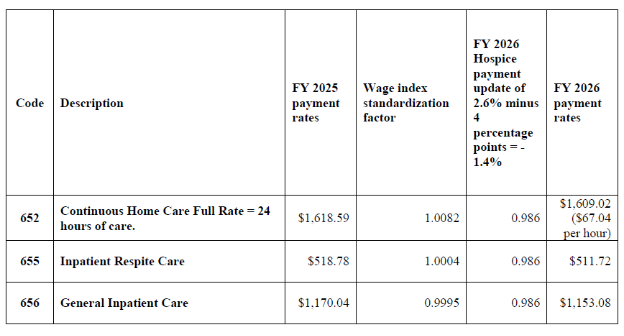
CMS currently recognizes revenue code 0651 for Routine Home Care, 0652 for Continuous Home Care, 0655 for Inpatient Respite Care, and 0656 for General Inpatient Care. Hospices must also report an appropriate HCPCS code with each level-of-care revenue code to identify the type of location where care was provided.
Using hospice codes correctly therefore requires more than memorizing numbers. Billing teams need to match every code to documentation, verify the patient’s care setting, follow ICD-10-CM sequencing requirements, and review current CMS and Medicare Administrative Contractor guidance before claims are released.

Context: Why Hospice Codes Matter in Medicare Billing
Hospice billing has a distinctive payment structure because Medicare pays hospice organizations according to the level of care furnished during each day of a beneficiary’s hospice election.
CMS identifies four payment levels: Routine Home Care, Continuous Home Care, Inpatient Respite Care, and General Inpatient Care. Each serves a different clinical purpose and carries different billing requirements.
That is why hospice codes must correspond with what actually happened during the patient’s care.
For example, if a claim reports General Inpatient Care but the medical record does not demonstrate why symptoms required inpatient management, the claim could face additional scrutiny. CMS has specifically identified General Inpatient Care documentation and medical necessity as an area subject to review.
Diagnosis selection is another important component.
Hospice providers must report the principal diagnosis most related to the patient’s terminal prognosis. CMS guidance effective for claims received on or after April 1, 2025 reinforced that certain symptom, sign, ill-defined, supplementary, and otherwise unacceptable diagnosis codes cannot serve as the principal diagnosis when coding rules require a more definitive diagnosis.
For billing teams, the practical rule is straightforward: hospice codes should never be selected in isolation.
The revenue code, location code, principal diagnosis, secondary diagnoses, dates, units, and clinical documentation should tell a consistent story.
What Works: Understanding the Main Hospice Codes
1. Start With the Four Medicare Level-of-Care Revenue Codes
The foundation of hospice codes is the set of revenue codes Medicare uses to identify the patient’s level of care.
Revenue code 0651 — Routine Home Care
Routine Home Care applies when the patient is under hospice care but does not require one of the other three levels of care. Depending on the circumstances, routine care may be delivered in a private residence, assisted living environment, nursing facility, or another residential setting.
Revenue code 0652 — Continuous Home Care
Continuous Home Care is used during a period of crisis when an increased level of care is necessary to maintain the patient at home.
CMS describes Continuous Home Care as requiring an aggregate of at least eight hours of care during a 24-hour period, primarily consisting of nursing care. Those eight hours do not necessarily have to be consecutive.
Revenue code 0655 — Inpatient Respite Care
This level provides temporary inpatient care to give the patient’s caregiver a break. Under Medicare hospice rules, inpatient respite generally may be provided for up to five consecutive days at one time.
Revenue code 0656 — General Inpatient Care
General Inpatient Care applies when pain control or acute or chronic symptom management cannot feasibly be provided in another setting.
When these hospice codes are applied accurately, the claim clearly communicates what level of care the patient required and helps Medicare apply the proper payment methodology.
2. Match HCPCS Codes to the Patient’s Location
A common mistake is assuming that the revenue code tells Medicare everything it needs to know.
It does not.
CMS requires hospices to report a HCPCS location code with each applicable level-of-care revenue code.
Common location codes include:
- Q5001 — hospice care provided in the patient’s home or residence
- Q5002 — assisted living facility
- Q5003 — nursing long-term care or non-skilled nursing facility
- Q5004 — skilled nursing facility
- Q5005 — inpatient hospital
- Q5006 — inpatient hospice facility
- Q5007 — long-term care hospital
- Q5008 — inpatient psychiatric facility
- Q5009 — location not otherwise specified
- Q5010 — hospice home care provided in a hospice facility
The lesson is important: hospice codes must communicate both the level of care and where that care occurred.
When patients move between locations during a billing period, separate reporting may be necessary to accurately represent the dates and settings involved.
3. Treat ICD-10-CM Diagnosis Selection Separately
Revenue codes and HCPCS codes describe the level and location of hospice care. ICD-10-CM codes describe the patient’s diagnoses.
These coding systems work together, but they answer different questions.
CMS states that hospices must report as the principal diagnosis the diagnosis most related to the terminal prognosis. An unacceptable principal diagnosis may cause Medicare to return the claim for correction.
For 2026 encounters, billing teams must also be careful about which ICD-10-CM version applies.
CMS has released code files that become effective October 1, 2026. That does not mean those future-effective codes should be applied to services performed before their effective date. Coding must correspond with the applicable date of service.
Accurate hospice codes therefore require good code-set version control.
An internal cheat sheet should always have an effective date so staff know whether it remains current.
4. Avoid Debility and Failure to Thrive as Principal Diagnoses
One of the most important hospice diagnosis rules concerns vague principal diagnoses.
CMS states that diagnoses describing debility and failure to thrive are unacceptable as principal diagnoses because they do not adequately describe the hospice patient’s terminal illness.
That does not mean symptoms and related conditions are irrelevant.
Instead, the principal diagnosis should follow official ICD-10-CM conventions and identify the condition most directly related to the terminal prognosis when supported by clinical documentation.
A strong process gives clinicians and coders a way to clarify insufficient documentation before a claim leaves the organization.
In this situation, hospice codes become a documentation-quality issue as much as a billing issue.
5. Follow ICD-10-CM Sequencing Instructions
ICD-10-CM contains rules such as “code first” and “use additional code.”
CMS specifically reminds hospice organizations to observe these conventions when submitting hospice claims. For certain etiology-and-manifestation relationships, the underlying condition must be sequenced before its manifestation.
A coder should therefore never choose hospice codes solely because a diagnosis description appears relevant.
The Alphabetic Index, Tabular List, official guidelines, code-specific instructions, documentation, and applicable payer edits all need consideration.
When an organization receives repeated diagnosis-related claim returns, introducing a pre-bill coding review can be much more efficient than correcting the same problem after submission.
6. Make Documentation Support Every Level of Care
Correct hospice codes are defensible only when the patient’s medical record supports the billed services.
For General Inpatient Care, documentation should clearly explain why the patient’s pain or symptoms could not be adequately managed in another environment.
For Continuous Home Care, documentation should demonstrate the period of crisis, hours of care, and required nursing component.
Routine Home Care and Inpatient Respite Care also need documentation consistent with the level reported.
A technically clean claim does not eliminate risk when its supporting medical record does not explain why a particular level of care was necessary.
This connection between documentation and billing is also why medical coding should not function separately from denial management and revenue-cycle operations.
Icon Billing already provides dedicated Medical Coding Services that can be used as a natural internal link from this section.
7. Pay Attention to Dates, Units, and Care Changes
Hospice claims become more complicated when a patient’s level of care changes within a single billing period.
CMS requires separate line reporting in certain situations when the level of care changes. Its Medicare Claims Processing Manual provides examples involving Routine Home Care, inpatient care, and a subsequent return to Routine Home Care.
Before claim submission, the billing team should compare hospice codes against the patient’s clinical timeline.
Confirm:
- the beginning date for each level of care,
- the ending or transition date,
- applicable units,
- location changes,
- diagnosis information, and
- supporting documentation.
This reconciliation prevents one of the easiest billing mistakes to overlook: using the correct code on the wrong date.
Trade-offs: Common Hospice Coding Mistakes
Even experienced billing professionals encounter difficulties because hospice claims combine clinical information, Medicare benefit rules, institutional billing requirements, HCPCS reporting, diagnosis coding, and frequently updated guidance.
One problem is selecting hospice codes from an old cheat sheet without confirming that the information remains current.
Internal reference sheets can be valuable. However, they should be version controlled and updated whenever CMS or coding authorities publish relevant changes.
Another problem is treating every returned claim as if it were an ordinary denial.
A returned claim may require correction before Medicare can process it, whereas a denial may require different investigation, documentation, or appeal activity.
Icon Billing’s Appeals and Denial Management Services would be an appropriate internal link here.
Another risk is relying too heavily on unspecified diagnosis codes.
CMS recognizes that unspecified coding can sometimes be appropriate when documentation does not provide greater specificity. However, providers are expected to follow applicable ICD-10-CM conventions and submit an acceptable principal hospice diagnosis.
Organizations should also avoid focusing only on whether hospice codes passed an initial claim edit.
A claim may pass front-end edits but later encounter medical review, payment adjustment, recoupment, or audit concerns.
The real objective is not simply claim acceptance. It is coding and documentation that remain defensible throughout the revenue cycle.
Next Steps: Build a Reliable Hospice Coding Workflow
A practical coding workflow begins with the clinical record.
First identify the terminal diagnosis and related conditions. Then determine the level of care, location, relevant dates, units, and services.
Next, apply ICD-10-CM rules that correspond with the actual date of service.
Then pair the appropriate revenue code with the correct HCPCS location code.
Before submission, compare hospice codes against the source documentation and run appropriate claim edits.
After submission, track returned and denied claims by root cause.
If certain hospice codes repeatedly create problems, determine whether the cause is documentation, employee training, software configuration, payer-specific requirements, incorrect units, location reporting, or an outdated coding resource.
Finally, connect coding performance with accounts receivable.
Coding errors that are not identified quickly can turn into aging balances and additional staff work. Icon Billing’s Account Receivable Management Services can be linked naturally from this discussion.
The strongest revenue cycle catches errors before they reach the payer instead of depending on AR staff to repair them later.
What are the four main Medicare hospice revenue codes?
The four primary level-of-care hospice codes are 0651 for Routine Home Care, 0652 for Continuous Home Care, 0655 for Inpatient Respite Care, and 0656 for General Inpatient Care. Providers should always verify current CMS billing guidance for the applicable service date.
Which codes identify where hospice care was provided?
Hospice providers use the appropriate Q-code, generally within the Q5001–Q5010 series, to identify the type of location where hospice services were delivered. For example, Q5001 represents the patient’s home or residence, while Q5006 identifies an inpatient hospice facility.
Accurate location reporting is an important part of correctly applying hospice codes.
Can failure to thrive be the principal hospice diagnosis?
CMS guidance states that diagnoses describing failure to thrive and debility are unacceptable as principal diagnoses for hospice claims. The principal diagnosis should represent the diagnosis most related to the terminal prognosis and comply with current ICD-10-CM rules.
References
The coding information in this guide is based primarily on the Centers for Medicare & Medicaid Services Medicare Claims Processing Manual, Chapter 11; CMS Medicare hospice payment guidance; MLN Matters MM13882 concerning principal diagnosis reporting; and current CMS ICD-10-CM resources.
Healthcare coding requirements change. Providers should verify hospice codes, ICD-10-CM versions, CMS instructions, and Medicare Administrative Contractor guidance that apply to the actual date of service before submitting a claim.
CTA: Get Help With Hospice Billing and Coding
Accurate hospice codes can help reduce preventable errors, strengthen billing consistency, and give revenue-cycle teams better insight into reimbursement problems.
But coding accuracy is only one part of successful hospice billing.
Clinical documentation, claims submission, payer edits, denial follow-up, and accounts receivable management all have to work together.
If your organization is dealing with coding problems, repeated claim returns, denials, or aging receivables, Icon Billing LLC can help you create a more reliable revenue-cycle workflow. Icon Billing specializes in medical coding, claims support, denial management, AR management, and other billing services designed to help healthcare organizations concentrate more of their resources on patient care.
Contact Icon Billing LLC to discuss your billing requirements and discover how a stronger coding and claim-management process can help protect your revenue.