15 Powerful CPT Codes Secrets: Avoid Costly Billing Errors and Maximize Healthcare Reimbursement
Introduction
Accurate medical billing is the foundation of a successful healthcare practice, and one of the most important components of that process is the proper use of cpt codes. Every healthcare service, procedure, evaluation, and treatment provided to a patient must be documented and reported correctly for reimbursement purposes. Without accurate cpt codes, healthcare providers may experience claim denials, delayed payments, compliance issues, and lost revenue.
The healthcare industry processes millions of claims every day, and insurance companies rely on cpt codes to understand what services were performed. Whether a physician conducts an office visit, performs surgery, orders diagnostic testing, or provides preventive care, appropriate cpt codes help ensure accurate communication between providers, payers, and patients.
For medical practices, hospitals, clinics, and billing professionals, understanding cpt codes is essential for maintaining compliance and optimizing revenue cycle management. Errors in coding can lead to audits, reimbursement reductions, and administrative burdens that affect overall practice performance.
At Icon Billing LLC, we help healthcare organizations improve billing accuracy and maximize reimbursement through professional medical billing and coding services. In this comprehensive guide, we explain everything you need to know about cpt codes, including their purpose, categories, benefits, common mistakes, and best practices for successful claim submission.
What Are CPT Codes?
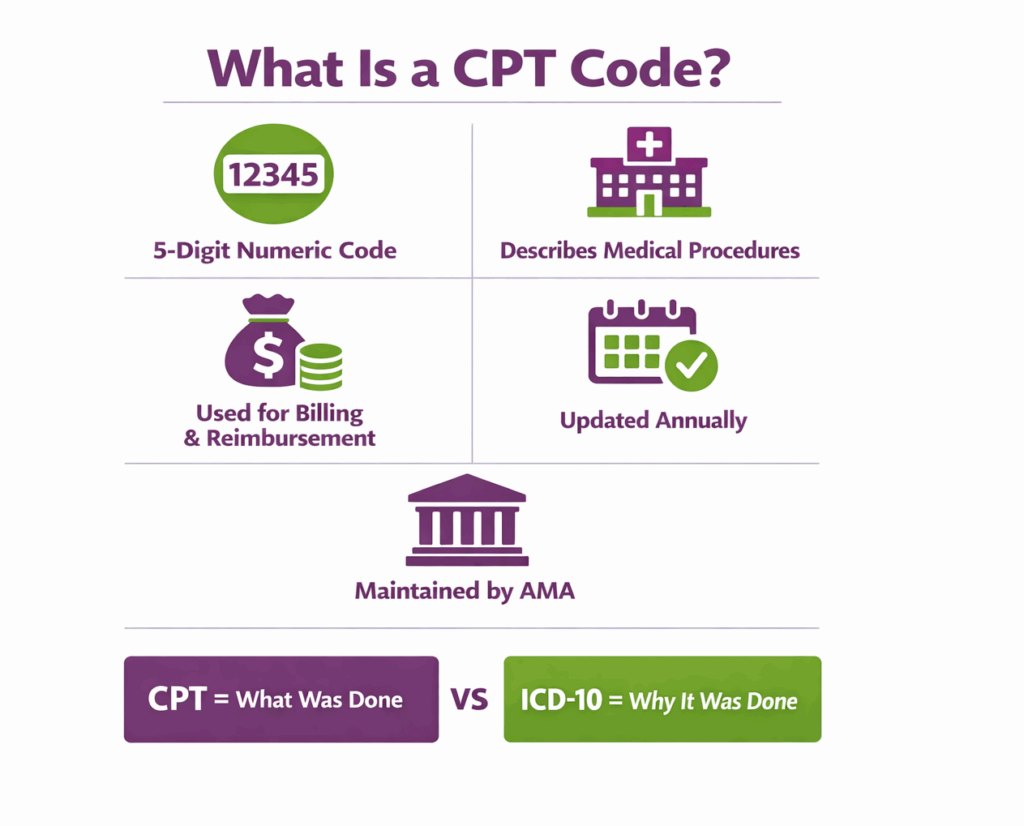
Cpt codes stand for Current Procedural Terminology codes.
These standardized medical codes are used to describe healthcare services and procedures performed by providers.
The American Medical Association (AMA) developed cpt codes to create a universal language for reporting medical services.
Healthcare organizations use cpt codes for:
- Medical billing
- Insurance claims
- Documentation
- Data analysis
- Quality reporting
- Reimbursement processing
Every healthcare encounter typically involves one or more cpt codes that identify the services provided.
These codes help insurance companies determine coverage and payment eligibility.
Why CPT Codes Are Important
The importance of cpt codes extends across the entire healthcare system.
Accurate Reimbursement
Insurance companies use cpt codes to calculate payments.
Standardized Communication
Providers and payers communicate using a common coding language.
Regulatory Compliance
Proper use of cpt codes helps organizations meet healthcare regulations.
Performance Tracking
Healthcare organizations analyze service utilization through coding data.
Revenue Cycle Efficiency
Accurate cpt codes reduce delays and denials.
Without proper coding, healthcare providers may struggle to receive timely reimbursement.
History and Development of CPT Codes
The healthcare industry introduced cpt codes to improve consistency in medical reporting.
Over time, the coding system evolved to support:
- New procedures
- Emerging technologies
- Telehealth services
- Advanced diagnostics
- Value-based care initiatives
Today, cpt codes are updated annually to reflect changes in medical practice.
Healthcare providers and billing professionals must remain current with coding updates to ensure compliance.
Continuous education is essential because coding standards frequently change.
Main Categories of CPT Codes
There are several categories of cpt codes used throughout healthcare.
Category I CPT Codes
These are the most commonly used cpt codes.
Examples include:
- Office visits
- Surgical procedures
- Laboratory services
- Radiology services
Category II CPT Codes
These codes support quality measurement and performance tracking.
Category III CPT Codes
These temporary cpt codes track emerging technologies and experimental procedures.
Understanding these categories helps healthcare providers code services accurately.
Each category serves a unique purpose within the reimbursement system.
How CPT Codes Work in Medical Billing
Medical billing depends heavily on accurate cpt codes.
The process typically follows these steps:
Patient Visit
The provider delivers healthcare services.
Documentation
Clinical records describe treatments and procedures.
Coding Assignment
Medical coders select appropriate cpt codes.
Claim Submission
Billing teams submit claims to insurance companies.
Reimbursement Review
Payers evaluate cpt codes and determine payment amounts.
Payment Processing
Approved claims result in reimbursement.
Accurate coding at every stage improves claim acceptance rates.
Powerful Benefits of CPT-Codes
Proper use of cpt-codes offers numerous benefits.
Faster Claims Processing
Insurance companies can review claims efficiently.
Improved Revenue
Accurate coding supports maximum reimbursement.
Reduced Claim Denials
Correct cpt-codes decrease billing errors.
Better Data Reporting
Organizations gain valuable operational insights.
Enhanced Compliance
Providers reduce regulatory risks.
Improved Patient Transparency
Patients receive clearer explanations of services provided.
These advantages contribute to stronger financial performance.
Common CPT-Codes Used in Healthcare
Thousands of cpt-codes exist across medical specialties.
Frequently used categories include:
Evaluation and Management
Office visits and consultations.
Surgery
Procedural and operative services.
Radiology
Imaging studies such as X-rays and MRIs.
Pathology and Laboratory
Diagnostic testing services.
Medicine
Vaccinations, therapy services, and specialty treatments.
Medical billing professionals must understand specialty-specific cpt-codes relevant to their organizations.
CPT Codes and Insurance Reimbursement
Insurance reimbursement is closely tied to cpt-codes.
Payers evaluate:
- Medical necessity
- Documentation quality
- Coding accuracy
- Coverage policies
Incorrect cpt-codes may result in:
- Claim denials
- Underpayments
- Payment delays
- Compliance concerns
Healthcare providers who prioritize coding accuracy typically experience stronger financial outcomes.
Consistent monitoring helps identify reimbursement opportunities.
Common CPT Coding Mistakes
Errors involving cpt-codes can significantly impact revenue.
Upcoding
Reporting higher-level services than documented.
Undercoding
Reporting lower-level services than performed.
Missing Documentation
Insufficient records may not support cpt-codes billed.
Incorrect Modifiers
Modifier errors often cause claim denials.
Outdated Codes
Using obsolete cpt-codes creates compliance issues.
Regular audits help identify and correct these problems.
Education remains essential for reducing coding errors.
CPT Codes and Compliance
Compliance is a major concern when using cpt-codes.
Healthcare organizations should focus on:
Accurate Documentation
Medical records must support reported services.
Internal Audits
Regular reviews identify coding risks.
Staff Training
Continuous education improves coding accuracy.
Policy Updates
Organizations should monitor annual code changes.
Regulatory Awareness
Compliance programs help prevent penalties.
Strong coding compliance reduces legal and financial risks.
Best Practices for Managing CPT-Codes
Healthcare organizations can improve coding performance through several strategies.
Invest in Training
Staff should remain current on coding changes.
Conduct Routine Audits
Review claims regularly for accuracy.
Use Coding Technology
Automation improves efficiency and consistency.
Strengthen Documentation
Providers should document services thoroughly.
Monitor Denials
Analyze coding-related denial trends.
Partner With Experts
Professional coding support improves results.
These practices enhance both compliance and revenue performance.
How CPT Codes Impact Revenue Cycle Management
Revenue cycle management depends on accurate cpt-codes.
Proper coding supports:
Faster Payments
Clean claims process more efficiently.
Lower Denial Rates
Accurate coding reduces payer rejections.
Better Cash Flow
Timely reimbursement improves financial stability.
Reduced Administrative Costs
Fewer corrections mean less rework.
Improved Reporting
Organizations gain clearer financial insights.
Healthcare providers who prioritize coding accuracy often experience stronger revenue cycle performance.
How Icon Billing LLC Helps With CPT-Codes
At Icon Billing LLC, we understand the complexity of modern healthcare coding.
Our professional services include:
- Medical billing
- Medical coding
- Revenue cycle management
- Denial management
- Insurance verification
- Credentialing services
- Compliance support
- Audit preparation
We help healthcare organizations optimize cpt-codes usage and improve reimbursement outcomes.
Our experienced team stays current on coding updates and payer requirements to support financial success.
By partnering with Icon Billing LLC, providers can reduce administrative burdens while focusing on patient care.
The Future of CPT-Codes
Healthcare continues evolving rapidly.
The future of cpt-codes will likely include:
Expanded Telehealth Coding
Virtual care services continue growing.
Greater Automation
Artificial intelligence may assist coding workflows.
Enhanced Data Analytics
Organizations will leverage coding data more effectively.
New Medical Technologies
Emerging treatments require updated cpt-codes.
Improved Interoperability
Coding systems will integrate more seamlessly across healthcare platforms.
These developments will continue shaping the future of medical billing.
Frequently Asked Questions
What are cpt-codes?
Cpt-codes are standardized medical procedure codes used for billing, reimbursement, and healthcare reporting.
Who creates cpt-codes?
The American Medical Association develops and maintains cpt-codes.
Why are cpt-codes important?
Cpt-codes help healthcare providers receive reimbursement and maintain billing accuracy.
How often are cpt-codes updated?
The coding system is typically updated annually.
Can incorrect cpt-codes cause claim denials?
Yes. Incorrect cpt-codes frequently lead to claim rejections and payment delays.
How can providers improve coding accuracy?
Training, audits, technology solutions, and expert support help improve cpt-codes accuracy.
Conclusion
Accurate use of cpt-codes is essential for healthcare organizations seeking to maximize reimbursement, maintain compliance, and improve operational efficiency. These standardized codes serve as the foundation of medical billing, enabling clear communication between providers, payers, and regulatory agencies. From routine office visits to complex surgical procedures, proper coding ensures that healthcare services are documented and reimbursed correctly.
Healthcare providers who invest in coding accuracy, staff training, and ongoing compliance efforts are better positioned to reduce claim denials, strengthen revenue cycle performance, and support long-term financial success. As healthcare continues evolving, understanding and managing cpt-codes will remain a critical component of effective practice management.
At Icon Billing LLC, we are committed to helping healthcare providers navigate the complexities of medical billing and coding. Through expert support, advanced billing solutions, and industry-leading knowledge, we help organizations optimize cpt-codes, improve reimbursement accuracy, and achieve sustainable growth.