15 Powerful POS 22 Facts: Avoid Costly Medical Billing Mistakes and Improve Claim Accuracy
Introduction
Medical billing and coding require precision, accuracy, and a deep understanding of healthcare regulations. Even a small coding mistake can lead to claim denials, delayed reimbursements, and compliance issues. One of the most important yet frequently misunderstood billing elements is POS 22. Healthcare providers, coders, and billing specialists must understand how POS 22 works to ensure claims are processed correctly and reimbursements are received on time.
POS 22 refers to the Place of Service code used when healthcare services are provided in an outpatient hospital setting. Insurance companies use this code to determine where services were rendered and how reimbursement should be calculated. Because reimbursement policies often differ depending on the place of service, using POS 22 incorrectly can create significant financial and administrative challenges.
Healthcare organizations are increasingly providing services in outpatient departments due to advances in technology and patient preferences. As a result, understanding POS 22 has become more important than ever. Medical billers must know when to use this code, how it differs from other place of service codes, and which billing mistakes to avoid.
At Icon Billing LLC, we help healthcare providers simplify medical billing and maximize reimbursement efficiency. In this comprehensive guide, we explain everything you need to know about POS 22, including definitions, billing rules, reimbursement guidelines, common mistakes, and best practices for successful claims management.
What Is POS 22?
POS 22 stands for Place of Service Code 22, which represents an outpatient hospital.
According to healthcare billing guidelines, POS 22 is used when a patient receives healthcare services in a hospital outpatient department rather than an inpatient setting.
Examples of services billed with POS 22 include:
- Outpatient surgeries
- Specialist consultations
- Diagnostic imaging
- Laboratory testing
- Infusion therapies
- Physical therapy
- Same-day procedures
Insurance companies rely on POS 22 to determine reimbursement rates and verify where services were performed.
Because payment methodologies vary by location, selecting the correct place of service code is extremely important.
Why Is POS 22 Important in Medical Billing?
Accurate coding directly impacts healthcare revenue.
POS 22 is important because it:
Determines Reimbursement
Insurance companies use POS 22 to calculate payment amounts.
Reduces Claim Denials
Correct coding improves claim acceptance rates.
Supports Regulatory Compliance
Proper use of POS 22 helps providers follow payer guidelines.
Improves Revenue Cycle Management
Accurate place of service coding reduces billing delays.
Enhances Documentation Accuracy
Medical records align more closely with submitted claims.
These benefits make understanding POS 22 essential for healthcare organizations.
Understanding Outpatient Hospital Services
To use POS 22 correctly, providers must understand outpatient hospital care.
Outpatient services are healthcare procedures that do not require overnight hospitalization.
Common outpatient services include:
Diagnostic Testing
Patients may receive:
- CT scans
- MRI exams
- Ultrasounds
- X-rays
Minor Surgical Procedures
Many surgeries are now performed under POS 22 settings.
Specialty Consultations
Specialists often provide care in hospital outpatient departments.
Infusion Treatments
Patients receiving chemotherapy or biologic therapies may be billed under POS 22.
As outpatient care expands, accurate billing becomes increasingly important.
POS 22 vs Other Place of Service Codes
Medical billers often compare POS 22 with other place of service codes.
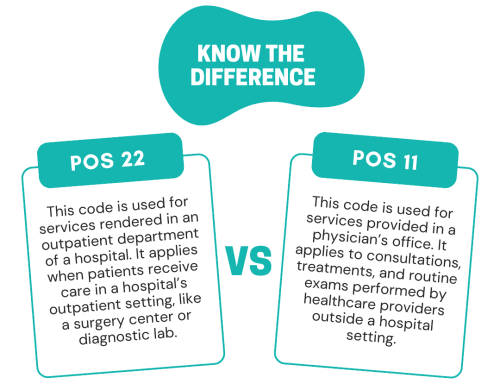
POS 11 – Office
POS 11 is used when services are provided in a physician’s office.
POS 21 – Inpatient Hospital
POS 21 applies to patients formally admitted to the hospital.
POS 22 – Outpatient Hospital
POS 22 applies when services occur in outpatient hospital departments.
POS 23 – Emergency Room
POS 23 is reserved for emergency department services.
Choosing the wrong code may result in:
- Claim denials
- Reduced reimbursement
- Payment delays
- Compliance concerns
Therefore, understanding differences between these codes is critical.
Powerful Benefits of Using POS 22 Correctly
Accurate use of POS 22 offers many advantages.
Improved Reimbursement Accuracy
Claims are processed according to payer guidelines.
Fewer Billing Errors
Proper coding reduces administrative mistakes.
Faster Claims Processing
Insurance companies review claims more efficiently.
Better Compliance
Providers maintain adherence to healthcare regulations.
Increased Revenue
Accurate billing improves reimbursement outcomes.
Enhanced Patient Satisfaction
Efficient billing creates a better patient experience.
These benefits demonstrate why mastering POS 22 is important.
Common Services Billed Under POS 22
Many healthcare services qualify for POS 22 billing.
Examples include:
Radiology Services
Hospitals frequently bill:
- MRI scans
- Mammograms
- CT imaging
Surgical Procedures
Same-day surgeries often require POS 22.
Physical Therapy
Hospital outpatient rehabilitation services use this code.
Cardiology Services
Diagnostic and treatment procedures may qualify.
Oncology Treatments
Many cancer therapies are billed using POS 22.
Specialty Clinics
Hospital-affiliated outpatient clinics often submit claims with POS 22.
Understanding eligible services improves billing accuracy.
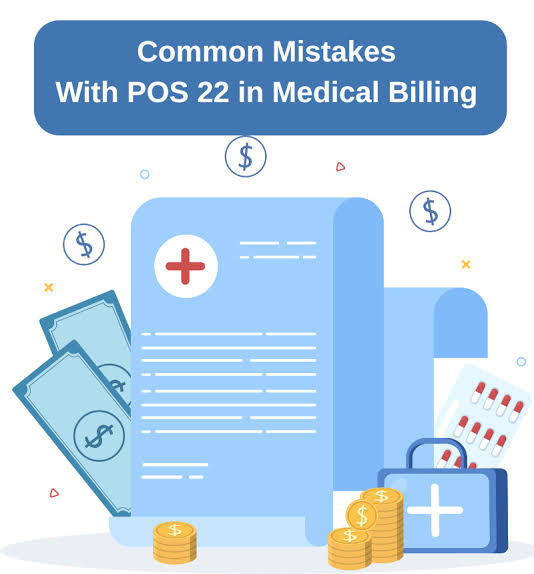
Common POS 22 Billing Mistakes
Billing errors involving POS 22 can be expensive.
Incorrect Place of Service Selection
Choosing POS 11 instead of POS 22 may alter reimbursement.
Inadequate Documentation
Medical records should support the selected place of service.
Failure to Verify Payer Policies
Insurance companies may apply different rules.
Coding Inconsistencies
Diagnosis codes should align with services performed.
Staff Training Gaps
Employees should understand POS-22 requirements thoroughly.
Avoiding these mistakes improves revenue cycle performance.
POS-22 and Medicare Billing
Medicare has specific guidelines regarding POS-22.
Healthcare providers should understand:
Facility Reimbursement Rules
Medicare reimburses outpatient hospitals differently than physician offices.
Professional Services
Providers may receive separate payments.
Documentation Standards
Medical records must support POS-22 claims.
Compliance Requirements
Accurate coding helps avoid audits and denials.
Medicare billing can be complex, making education and expertise essential.
POS-22 and Commercial Insurance
Commercial insurance companies also rely on POS-22.
Payers often review:
- Service location
- Provider type
- Procedure codes
- Medical necessity
- Contract terms
Some insurers reimburse POS-22 claims differently than office-based services.
Healthcare organizations should:
- Review payer contracts
- Verify benefits
- Monitor reimbursement trends
- Audit claims regularly
These strategies help improve financial performance.
Best Practices for POS-22 Billing
Healthcare organizations can improve results by following best practices.
Train Billing Staff
Employees should understand POS-22 guidelines thoroughly.
Audit Claims Regularly
Routine reviews identify coding errors early.
Maintain Accurate Documentation
Clinical records should support all billed services.
Verify Insurance Coverage
Confirm payer requirements before submitting claims.
Monitor Reimbursement Trends
Track payments related to POS-22 claims.
Invest in Billing Technology
Automation improves accuracy and efficiency.
These strategies reduce denials and strengthen revenue cycle management.
How POS-22 Impacts Revenue Cycle Management
Revenue cycle management depends heavily on accurate coding.
Using POS-22 correctly helps organizations:
Reduce Denials
Claims are less likely to be rejected.
Improve Cash Flow
Faster reimbursements strengthen financial performance.
Increase Coding Accuracy
Billing teams follow standardized processes.
Enhance Compliance
Organizations reduce regulatory risks.
Improve Operational Efficiency
Staff spend less time correcting billing errors.
Healthcare providers that prioritize accurate POS-22 coding often experience stronger financial outcomes.
How Icon Billing LLC Supports POS-22 Billing
At Icon Billing LLC, we understand the challenges healthcare organizations face when managing outpatient billing.
Our experienced team provides:
- Medical billing services
- Medical coding
- Insurance verification
- Claims submission
- Denial management
- Revenue cycle management
- Compliance support
- Credentialing services
We help healthcare providers optimize POS-22 billing, reduce denials, and maximize reimbursements.
Our goal is to simplify complex billing processes so providers can focus on delivering exceptional patient care.
The Future of POS-22 and Outpatient Billing
Healthcare continues evolving rapidly.
The future of POS-22 billing may include:
Greater Automation
Billing systems will automatically validate coding accuracy.
Artificial Intelligence
AI tools will identify billing errors before submission.
Enhanced Analytics
Providers will gain deeper reimbursement insights.
Expanded Outpatient Services
More procedures will move to outpatient settings.
Improved Compliance Tools
Technology will simplify regulatory requirements.
As outpatient healthcare grows, understanding POS-22 will become even more important.
Frequently Asked Questions
What is POS-22?
POS-22 is the Place of Service code used when healthcare services are provided in an outpatient hospital setting.
Why is POS-22 important?
POS-22 helps insurance companies determine reimbursement and verify service locations.
What services use POS-22?
Common services include outpatient surgeries, imaging studies, specialty consultations, and infusion therapies.
Can incorrect POS-22 coding cause claim denials?
Yes. Incorrect POS-22 coding may lead to claim denials or reimbursement delays.
Does Medicare recognize POS-22?
Yes. Medicare uses POS-22 and has specific reimbursement rules for outpatient hospital services.
How can healthcare providers improve POS-22 billing?
Providers should train staff, verify payer policies, maintain accurate documentation, and perform regular billing audits.
Conclusion
Understanding POS-22 is essential for healthcare providers seeking accurate billing, faster reimbursements, and stronger financial performance. Because outpatient hospital services continue expanding, proper use of POS-22 has become increasingly important for maintaining compliance and optimizing revenue cycle management.
From diagnostic imaging and outpatient surgeries to specialty consultations and infusion therapies, POS-22 plays a critical role in healthcare billing. Providers that invest in education, staff training, and billing expertise are better positioned to avoid costly mistakes and improve claim outcomes.
At Icon Billing LLC, we are committed to helping healthcare organizations navigate complex billing requirements with confidence. Through expert medical billing, coding, and revenue cycle management services, we help providers optimize POS-22 claims, reduce denials, and focus on what matters most—delivering outstanding patient care.