
7 Devastating UTI ICD 10 Coding Mistakes That Destroy Your Claims and Revenue – Ultimate Fix Guide
Urinary tract infections (UTIs) are among the most common diagnoses in outpatient and inpatient settings. Millions of patients seek care for UTI symptoms every year, generating a constant stream of claims for physician visits, laboratory tests, and prescriptions. Yet despite its prevalence, UTI ICD 10 coding remains a significant source of errors, denials, and lost revenue for medical practices. UTI ICD 10 codes are more complex than many providers realize, with specificity requirements for anatomical site, infectious organism, and associated conditions. A single mistake in UTI ICD 10 coding—using an unspecified code when a specific one is required, failing to document the organism, or missing a related diagnosis—can trigger claim denials, payment delays, and compliance audits. At Icon Billing LLC, we have seen practices lose tens of thousands of dollars because of preventable UTI ICD 10 errors, and we have helped them recover.
This comprehensive guide will expose seven devastating UTI ICD 10 coding mistakes that destroy your claims and revenue. You will learn exactly how to select the correct UTI ICD 10 code for every clinical scenario, how to document for maximum specificity, how to link UTI ICD 10 codes to procedure codes, and how to build a coding workflow that produces clean claims. Whether you are a primary care physician, a urologist, an emergency medicine provider, or a billing professional supporting healthcare providers, mastering UTI ICD 10 coding is essential for financial survival. Let’s dive into the details and transform your UTI ICD 10 coding from a vulnerability into a strength.
What Is UTI ICD 10 and Why Does It Matter?
UTI ICD 10 refers to the International Classification of Diseases, Tenth Revision codes used to report urinary tract infections on medical claims. The UTI ICD 10 coding system is organized by anatomical site: infections of the kidney (pyelonephritis), bladder (cystitis), urethra (urethritis), and other parts of the urinary system. Each category has specific codes that further specify the infectious organism—E. coli, Klebsiella, Pseudomonas, and others—or whether the organism is unspecified. UTI ICD 10 codes also capture associated conditions such as obstruction, stones, or pregnancy.
UTI ICD 10 coding matters because accurate codes directly affect reimbursement, quality reporting, and risk adjustment. Payers scrutinize UTI ICD 10 codes to verify medical necessity, determine the appropriate level of care, and calculate payment. An inaccurate UTI ICD 10 code does not just affect the current claim—it distorts your practice’s data, invites audits, and can trigger penalties under programs like MIPS. For practices committed to both clinical excellence and financial health, UTI ICD 10 accuracy is non-negotiable.
Devastating Mistake #1: Using Unspecified UTI ICD 10 Codes When Specificity Exists
The most common UTI ICD 10 mistake is defaulting to unspecified codes when more specific codes exist. For example, coding N39.0 (Urinary tract infection, site not specified) when the documentation clearly identifies cystitis or pyelonephritis. Or coding N30.90 (Cystitis, unspecified without hematuria) when the organism is known and should be coded specifically. Unspecified UTI ICD 10 codes weaken the claim because they fail to communicate the full clinical picture and the complexity of the patient’s condition.
Payers increasingly scrutinize UTI ICD 10 codes for specificity. Unspecified codes can trigger denials for medical necessity, especially when billing for higher-level services or procedures. The solution is to ensure that UTI ICD 10 coding staff have access to complete clinical documentation and understand how to extract the most specific codes possible. Icon Billing LLC provides ongoing UTI ICD 10 education and pre-bill audits that identify patterns of unspecified coding. We work with providers to improve documentation so that UTI ICD 10 coding can capture the full complexity of every encounter.
Devastating Mistake #2: Confusing Cystitis and Pyelonephritis in UTI ICD 10 Coding
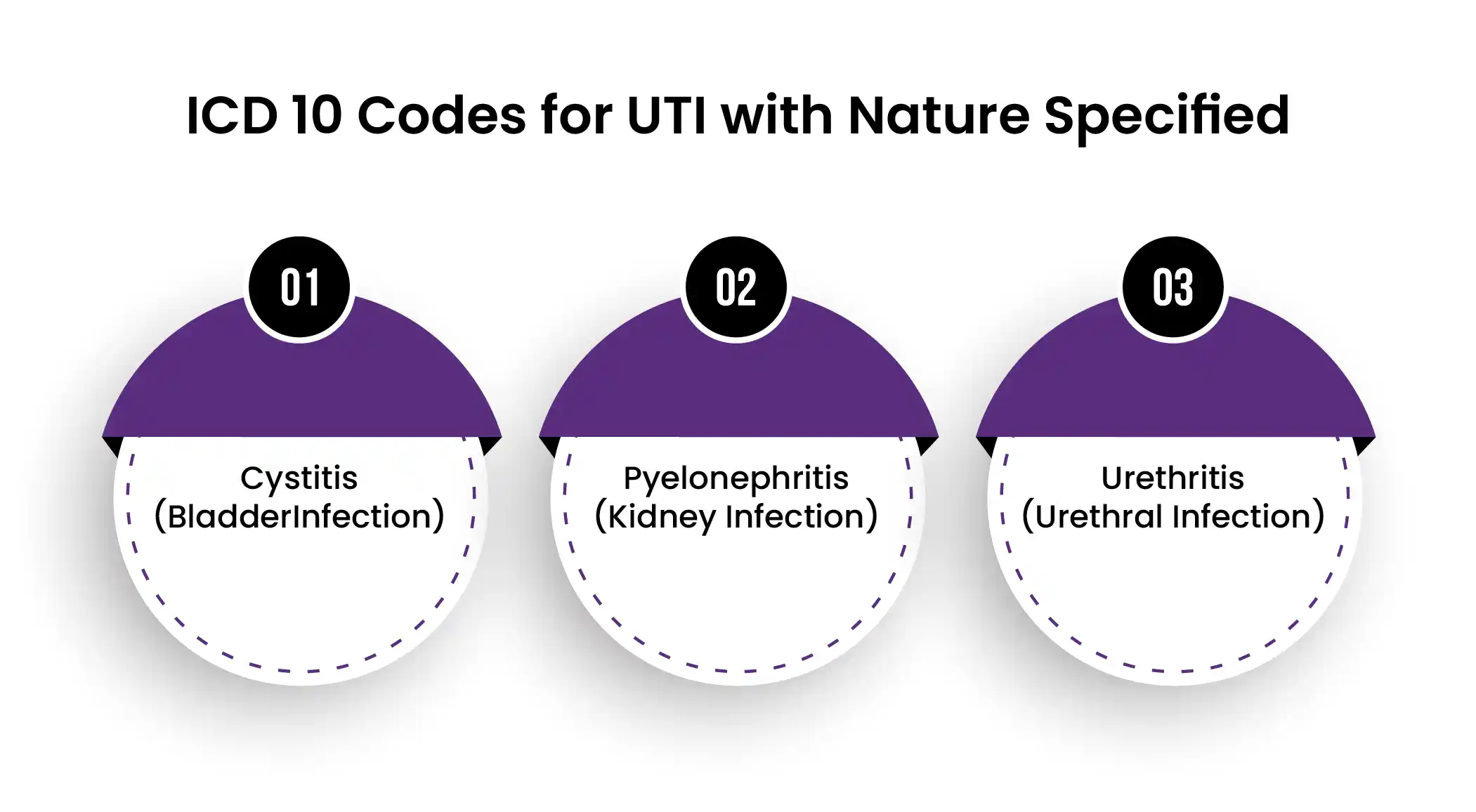
One of the most significant UTI ICD 10 coding mistakes is confusing cystitis (bladder infection) with pyelonephritis (kidney infection). These are distinct conditions with different UTI ICD 10 codes and different levels of clinical severity. Cystitis is coded from the N30 series, while pyelonephritis is coded from the N10 and N11 series. Billing a kidney infection with a bladder infection code, or vice versa, misrepresents the patient’s condition and can trigger denials or audit scrutiny.
The distinction matters because pyelonephritis is a more serious condition that may require higher-level care, hospitalization, or intravenous antibiotics. UTI ICD 10 codes for pyelonephritis (N10, N11) communicate this severity, while cystitis codes (N30) do not. Providers must document the specific site of infection, and coders must assign the correct UTI ICD 10 code based on that documentation. Icon Billing LLC’s UTI ICD 10 specialists are experts in urinary tract coding. We review clinical documentation carefully to ensure the correct anatomical site is coded. We also provide feedback to providers when documentation is ambiguous, improving the accuracy of future UTI ICD 10 coding.
Devastating Mistake #3: Ignoring the Infectious Organism in UTI ICD 10 Coding
UTI ICD 10 codes often require specification of the infectious organism. For example, N10 (Acute pyelonephritis) is a general code, but B96.20 (Unspecified Escherichia coli as the cause of diseases classified elsewhere) can be added to specify E. coli as the organism. Similarly, N30.00 (Acute cystitis without hematuria) does not specify the organism, but additional codes from the B95-B97 series can identify the infectious agent. A devastating UTI ICD 10 mistake is failing to code the organism when it is documented in the lab results.
Payers expect UTI ICD 10 coding to reflect the full clinical picture, including the organism when known. Failure to code the organism can result in denials or requests for additional information. Icon Billing LLC’s UTI ICD 10 coding team reviews laboratory results and documentation to identify the infectious organism. We apply the appropriate additional codes to specify E. coli, Klebsiella, Pseudomonas, or other organisms. Our precise UTI ICD 10 coding captures the complete diagnosis and supports medical necessity.
Devastating Mistake #4: Failing to Link UTI ICD 10 Codes to Procedure Codes
In medical billing, the UTI ICD 10 codes must support the medical necessity of the procedure codes on the claim. This is called code linkage. A devastating error occurs when a coder assigns a procedure code that does not match the UTI ICD 10 diagnosis. For example, billing a urine culture (CPT 87086) with a diagnosis of cystitis is appropriate, but billing a CT scan of the abdomen with a diagnosis of uncomplicated cystitis may be denied because the diagnosis does not support the medical necessity of the imaging study. The payer sees a mismatch between the procedure and the UTI ICD 10 code and rejects the claim.
Code linkage errors in UTI ICD 10 coding often occur when coders work from incomplete encounter forms or when diagnosis codes are pulled from outdated problem lists. The solution is careful, deliberate coding that ensures every procedure is backed by a corresponding UTI ICD 10 diagnosis. Icon Billing LLC’s pre-bill claim scrub includes automated and manual checks for code linkage. We catch mismatches before they reach the payer, preventing denials and protecting your revenue.
Devastating Mistake #5: Overlooking UTI ICD 10 Codes for Pregnancy-Related UTIs
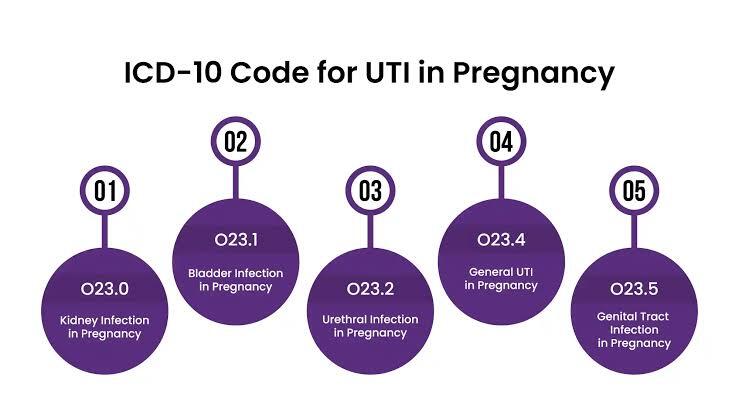
Urinary tract infections are common during pregnancy and require special UTI ICD 10 coding attention. The O-series codes in Chapter 15 of ICD-10-CM capture pregnancy-related UTIs, including O23.40 (Unspecified infection of urinary tract in pregnancy) and O23.41 (Infection of kidney in pregnancy). A devastating UTI ICD 10 mistake is using the standard N-series codes for UTIs during pregnancy instead of the appropriate O-series codes. This error misclassifies the condition and can trigger claim denials, quality metric failures, and compliance issues.
Pregnancy-related UTI ICD 10 codes require specific documentation of the trimester and the site of infection. Icon Billing LLC’s coders are trained in obstetric coding, ensuring that UTIs during pregnancy are captured with the correct UTI ICD 10 codes. We work with obstetric practices to improve documentation and coding accuracy for pregnancy-related UTIs. Our expertise ensures that these claims are paid correctly and that quality metrics are accurate.
Devastating Mistake #6: Failing to Document and Code Associated Conditions
UTI ICD 10 coding often involves associated conditions that affect the severity and treatment of the infection. These include urinary obstruction, kidney stones, diabetes, and immunosuppression. A devastating UTI ICD-10 mistake is failing to document and code these associated conditions. For example, a UTI in a patient with a kidney stone requires coding of both the UTI ICD 10 code and the stone code (N20.0). A UTI in a diabetic patient requires coding of the diabetes and the UTI ICD-10 code. Failure to capture these associated conditions can result in undercoding, underpayment, and inaccurate risk adjustment.
The solution is comprehensive documentation and coding. Providers must document all relevant conditions, and coders must assign UTI ICD-10 codes for the infection along with codes for associated conditions. Icon Billing LLC’s UTI ICD-10 coding team reviews documentation to identify all codable conditions. We ensure that associated conditions are captured, improving both reimbursement and quality reporting. Our UTI ICD-10 expertise ensures that no relevant diagnosis is overlooked.
Devastating Mistake #7: Failing to Invest in Ongoing UTI ICD-10 Education
The UTI ICD-10 coding landscape is not static. Codes are updated annually, guidelines evolve, and payer policies shift. A devastating mistake is assuming that once your coding team knows the UTI ICD-10 codes, they know them forever. Without ongoing education, coders fall behind on code changes, new regulations, and emerging best practices. Their UTI ICD-10 accuracy declines, and denials increase. The financial impact accumulates silently, month after month.
The solution is continuous investment in UTI ICD-10 education. Coders should receive regular training on code updates, payer policies, and documentation requirements. Icon Billing LLC provides ongoing UTI ICD-10 education as part of our comprehensive billing services. Our coders are certified, current, and continuously learning. When you partner with us, you gain access to a team that treats UTI ICD-10 coding as a dynamic, evolving discipline—not a static skill.
Building a Winning UTI ICD-10 Coding Workflow
Now that the mistakes are clear, here is the proactive UTI ICD-10 coding workflow Icon Billing LLC follows:
-
Capture Complete Documentation. Providers should document the specific site of infection, the infectious organism, and any associated conditions.
-
Assign Specific Codes. Use the most specific UTI ICD-10 code based on the documented site and organism.
-
Code Associated Conditions. Include codes for obstruction, stones, diabetes, and other relevant conditions.
-
Link Diagnosis to Procedures. Confirm that every procedure is supported by a corresponding UTI ICD-10 diagnosis.
-
Use O-Series Codes for Pregnancy. Apply the correct obstetric UTI ICD-10 codes for UTIs during pregnancy.
-
Perform Pre-Bill Audits. Review UTI ICD-10 coding on every claim before submission to catch errors.
-
Track Denials by Root Cause. Analyze denied claims to identify UTI ICD-10 error patterns and implement corrective actions.
This workflow transforms UTI ICD-10 coding from a confusing chore into a structured, reliable process. Icon Billing LLC executes it daily for practices across multiple specialties, producing clean claims and healthy revenue.
How Icon Billing LLC Transforms UTI ICD-10 Coding Success
When you partner with Icon Billing LLC, you gain a team of certified coding professionals who understand the nuances of accurate UTI ICD-10 coding. Our services include:
-
Comprehensive coding audits to identify UTI ICD-10 errors and missed revenue opportunities.
-
Pre-bill claim scrubbing that catches UTI ICD-10 mistakes before submission.
-
Denial management that recovers revenue from incorrectly coded claims.
-
Provider education that improves documentation and UTI ICD-10 accuracy.
-
Payer policy tracking that keeps your UTI ICD-10 coding current with changing requirements.
-
Compliance support that protects you from audit risk.
Our goal is to make UTI ICD-10 coding a strength of your practice, not a source of anxiety. We have helped practices improve clean claim rates, reduce denials, and recover lost revenue through disciplined UTI ICD-10 management.
Real-World Consequences of UTI ICD-10 Errors
Consider these composite examples based on cases we have encountered:
Scenario 1: A primary care practice consistently used N39.0 for all UTI claims, failing to specify cystitis or pyelonephritis. A payer audit flagged the pattern, and the practice was forced to repay $45,000 in overpayments. Icon Billing LLC corrected the UTI ICD-10 coding, improved documentation, and prevented future recoupments.
Scenario 2: A urology practice failed to code the infectious organism for UTIs, resulting in denials for insufficient specificity. Claims were denied at a rate of 12%. Icon Billing LLC added the organism codes, reducing denials to under 2%.
Scenario 3: An obstetric practice used N30 codes for UTIs during pregnancy instead of O23 codes. Claims were denied for incorrect coding, causing a 15% denial rate. Icon Billing LLC corrected the UTI ICD-10 coding and reduced denials to under 3%.
In each case, disciplined UTI ICD-10 management would have prevented the loss. Icon Billing LLC exists to ensure your practice never suffers from these preventable errors.
Frequently Asked Questions About UTI ICD-10
Q: What is the correct UTI ICD-10 code for a urinary tract infection?
A: The correct UTI ICD-10 code depends on the site and organism. N39.0 is used for site not specified. N30.- is used for cystitis. N10 and N11 are used for pyelonephritis.
Q: How do I code a UTI with E. coli?
A: Code the UTI ICD-10 site code first (e.g., N30.00 for acute cystitis), then add B96.20 for E. coli as the cause.
Q: What is the UTI ICD-10 code for a UTI in pregnancy?
A: Use O23.40 for unspecified infection of urinary tract in pregnancy, or O23.41 for infection of kidney in pregnancy. UTI ICD-10 codes for pregnancy are from the O-series.
Q: Can I use N39.0 for all UTIs?
A: N39.0 is an unspecified UTI ICD-10 code. Use it only when the site cannot be determined. More specific codes should be used when possible.
Q: What should I do if I discover a UTI ICD-10 error on a submitted claim?
A: File a corrected claim as soon as possible. Icon Billing LLC can help you identify and correct UTI ICD-10 errors on submitted claims.
Proactive Steps You Can Take Today
-
Audit your recent UTI claims to identify UTI ICD-10 error patterns. Look for unspecified codes, missing organism codes, and pregnancy coding issues.
-
Review your documentation templates to ensure they capture the details needed for accurate UTI ICD-10 coding.
-
Invest in continuing education for your coding team. A single training session on UTI ICD-10 can prevent thousands of dollars in denials.
-
Contact Icon Billing LLC for a comprehensive UTI ICD-10 review. We will assess your current accuracy, identify risks, and implement corrective actions.
Conclusion: Master UTI ICD-10 for Maximum Reimbursement
The seven devastating mistakes—using unspecified codes, confusing cystitis and pyelonephritis, ignoring the organism, failing code linkage, overlooking pregnancy codes, missing associated conditions, and neglecting ongoing education—are all avoidable with discipline and expertise. UTI ICD-10 coding is complex, but it is a complexity that can be mastered. With the right knowledge, the right processes, and the right partner, your practice can submit clean, accurate, and compliant claims every time.
Icon Billing LLC is dedicated to making UTI ICD-10 coding a strength of your practice. We bring the knowledge, the processes, and the vigilance needed to protect your revenue and keep your claims flowing. Do not let preventable UTI ICD-10 errors drain your practice’s financial health. Contact us today to learn how our UTI ICD-10 management service can improve your clean claim rates, reduce denials, and maximize reimbursement. Your patients deserve excellent care—and your practice deserves to be paid for that care. With the right UTI ICD-10 strategy, you can have both.