
11 Powerful Low Back Pain ICD 10 Coding Tips to Avoid Costly Claim Denials
Introduction
Accurate diagnosis coding is one of the most important components of successful medical billing and revenue cycle management. Among the most frequently reported musculoskeletal conditions in healthcare settings is low back pain icd 10 coding. Healthcare providers, coders, and billing professionals must understand how to properly document and code low back pain conditions to ensure compliance, maximize reimbursement, and reduce claim denials.
Low back pain affects millions of patients each year and represents one of the leading causes of physician visits, lost productivity, disability claims, and healthcare expenditures. Because of the high volume of encounters involving low back pain, accurate low back pain icd 10 coding plays a critical role in medical practice operations.
Improper coding can lead to claim rejections, payment delays, compliance concerns, and increased scrutiny from insurance carriers. Conversely, proper low back pain icd 10 coding supports accurate reimbursement and reflects the patient’s clinical condition appropriately.
This comprehensive guide explores everything healthcare providers and billing professionals need to know about low back pain icd 10 coding, documentation requirements, billing best practices, common errors, and strategies for optimizing claim outcomes.

Understanding Low Back Pain ICD 10 Coding
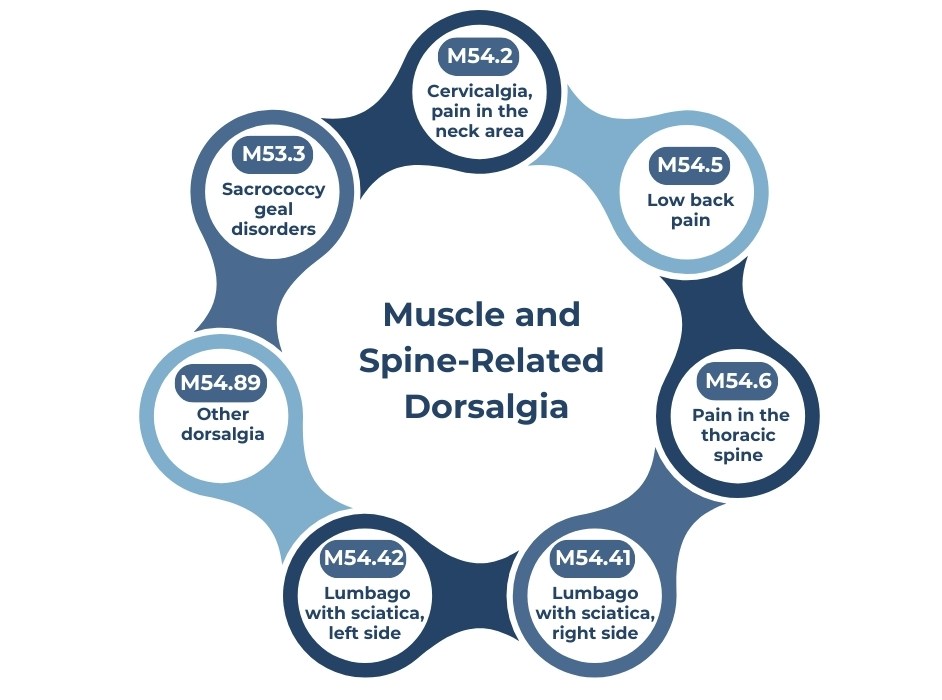
The low back pain icd 10 classification is used to report pain localized in the lumbar region of the spine. ICD-10-CM provides standardized diagnosis codes that allow healthcare providers and payers to communicate patient conditions accurately.
The most commonly used code associated with low back pain icd 10 is:
| ICD-10 Code | Description |
|---|---|
| M54.50 | Low back pain, unspecified |
| M54.51 | Vertebrogenic low back pain |
| M54.59 | Other low back pain |
Selecting the correct low back pain icd 10 code requires careful review of provider documentation and clinical findings.
Medical coders should avoid automatically assigning generalized codes when more specific information is available.
Accurate low back pain icd 10 coding improves data quality, reimbursement accuracy, and overall healthcare reporting.
Why Accurate Low Back Pain ICD 10 Coding Matters
Accurate low back pain icd 10 coding benefits healthcare organizations in several important ways.
Improves Reimbursement Accuracy
Insurance carriers rely on diagnosis codes to determine medical necessity and payment eligibility. Correct low back pain icd 10 coding helps support reimbursement.
Reduces Claim Denials
Many denials occur because of coding inconsistencies, insufficient documentation, or incorrect diagnosis selection. Proper low back pain icd 10 coding helps minimize these issues.
Supports Compliance
Healthcare organizations must maintain coding compliance to avoid audits and regulatory concerns. Accurate low back pain icd 10 assignment supports proper reporting standards.
Enhances Clinical Documentation
Precise low back pain icd 10 coding encourages providers to document patient conditions more thoroughly.
Strengthens Revenue Cycle Performance
When claims are submitted correctly the first time, practices often experience improved cash flow and fewer billing disruptions.
Common Causes of Low Back Pain
Understanding the clinical causes of low back pain helps support appropriate low back pain icd 10 code selection.
Common causes include:
- Muscle strain
- Ligament injuries
- Degenerative disc disease
- Herniated discs
- Spinal stenosis
- Arthritis
- Vertebral fractures
- Poor posture
- Occupational injuries
- Repetitive stress conditions
Provider documentation should clearly identify underlying causes whenever possible to improve low back pain icd 10 coding specificity.
The more detailed the documentation, the more accurately coders can assign the appropriate diagnosis code.
Documentation Requirements for Low Back Pain ICD 10
Strong clinical documentation serves as the foundation of accurate low back pain icd 10 coding.
Providers should document:
Pain Location
Clearly identify the affected lumbar region.
Duration
Document whether the pain is:
- Acute
- Subacute
- Chronic
Severity
Pain severity helps establish medical necessity for treatment and supports appropriate low back pain icd 10 coding.
Associated Symptoms
Relevant symptoms may include:
- Radiculopathy
- Weakness
- Numbness
- Limited mobility
Underlying Conditions
Identifying contributing conditions allows coders to assign the most specific low back pain icd 10 code available.
Incomplete documentation often results in coding uncertainty and increased denial risk.
Common Low Back Pain ICD 10 Coding Mistakes
Even experienced coders occasionally encounter challenges involving low back pain icd 10 coding.
Using Unspecified Codes Excessively
Although unspecified codes are sometimes appropriate, excessive reliance on generalized low back pain icd 10 codes may raise payer concerns.
Ignoring Documentation Details
Failing to capture clinical specificity can lead to inaccurate coding.
Missing Related Diagnoses
Conditions contributing to low back pain should be reported when properly documented.
Inconsistent Coding
Variations in low back pain icd 10 code selection among coders may create billing inconsistencies.
Lack of Provider Queries
When documentation is unclear, coders should seek clarification rather than guessing.
Avoiding these mistakes helps improve claim acceptance rates and reimbursement outcomes.
Low Back Pain ICD 10 and Medical Necessity
Insurance carriers frequently evaluate medical necessity when reviewing claims associated with low back pain icd 10 diagnoses.
Medical necessity may be supported by:
- Physical examinations
- Imaging studies
- Functional limitations
- Conservative treatment history
- Specialist evaluations
Proper documentation and accurate low back pain icd 10 coding work together to justify diagnostic testing, therapy services, and treatment plans.
Failure to establish medical necessity can result in denied or reduced payments.
Billing Best Practices for Low Back Pain ICD 10 Claims
Healthcare organizations can strengthen claim performance by implementing proven low back pain icd 10 billing strategies.
Conduct Documentation Reviews
Regular chart audits help identify coding opportunities and compliance concerns.
Educate Providers
Provider education improves documentation quality and supports accurate low back pain icd 10 code selection.
Monitor Denial Trends
Tracking denial patterns helps identify recurring coding issues.
Utilize Coding Resources
Coders should stay informed regarding annual ICD-10 updates and payer requirements.
Perform Internal Audits
Routine audits improve coding consistency and strengthen compliance efforts.
Organizations that prioritize accurate low back pain icd 10 coding often experience fewer reimbursement challenges.
The Role of Medical Billing Companies in Low Back Pain ICD 10 Coding
Professional billing companies help healthcare practices optimize revenue cycle performance through accurate coding and claim management.
Medical billing specialists can assist with:
| Service | Benefit |
|---|---|
| Coding Review | Improved accuracy |
| Claim Submission | Faster processing |
| Denial Management | Higher recovery rates |
| Compliance Monitoring | Reduced risk |
| Revenue Analysis | Better financial performance |
Experienced billing teams understand payer requirements related to low back pain icd-10 claims and can help practices maximize reimbursement opportunities.
For providers managing high patient volumes, outsourcing coding and billing functions may improve operational efficiency.
Future Trends in Low Back Pain ICD-10 Coding
Healthcare coding continues to evolve.
Several trends may influence low back pain icd-10 reporting in the future:
Increased Specificity
Payers increasingly favor detailed diagnosis reporting.
Enhanced Documentation Standards
Electronic health record systems continue to improve documentation workflows.
Artificial Intelligence Support
AI-assisted coding tools may help improve low back pain icd-10 coding accuracy.
Expanded Compliance Monitoring
Regulatory agencies and insurers continue to emphasize coding precision and documentation quality.
Organizations that stay current with evolving coding practices will be better positioned for long-term success.
Best Practices for Maximizing Coding Accuracy
Healthcare organizations can strengthen low back pain icd-10 coding accuracy through several proactive measures.
Maintain Ongoing Education
Regular training keeps coders informed about coding updates.
Improve Provider Communication
Collaboration between providers and coders supports accurate diagnosis reporting.
Implement Quality Assurance Programs
Quality reviews help identify documentation and coding gaps.
Leverage Technology
Coding software and auditing tools can improve consistency.
Focus on Compliance
Maintaining compliance reduces audit risks and strengthens claim integrity.
These strategies help ensure reliable low back pain icd-10 coding and better financial outcomes.
Frequently Asked Questions
What is the most common low back pain icd-10 code?
M54.50 is commonly used for unspecified low back pain icd-10 diagnoses.
Why is accurate low back pain icd-10 coding important?
Accurate low back pain icd-10 coding supports reimbursement, compliance, and proper clinical reporting.
Can low back pain icd-10 codes affect reimbursement?
Yes. Incorrect low back pain icd-10 coding may result in denials or reduced payments.
What documentation is needed for low back pain icd-10 coding?
Providers should document pain location, severity, duration, symptoms, and underlying conditions.
How can practices reduce low back pain icd-10 claim denials?
Strong documentation, coding accuracy, and regular audits can significantly reduce denials.
Are unspecified low back pain icd-10 codes acceptable?
They may be appropriate in certain situations, but greater specificity is generally preferred when supported by documentation.
Should providers work with medical billing specialists?
Many practices benefit from professional billing support for complex low back pain icd-10 coding and reimbursement management.
Conclusion
Accurate low back pain icd-10 coding is essential for healthcare providers seeking efficient reimbursement, regulatory compliance, and strong revenue cycle performance. Because low back pain remains one of the most common diagnoses encountered in medical practice, coding accuracy directly impacts financial outcomes and claim success rates.
Healthcare organizations that invest in provider education, documentation improvement, coding audits, and billing expertise can significantly reduce claim denials and improve reimbursement efficiency. By understanding the nuances of low back pain icd-10 coding, practices can strengthen compliance, enhance patient care documentation, and support sustainable financial growth.
At Icon Billing LLC, we specialize in medical billing, coding support, denial management, and revenue cycle optimization. Our experienced team helps healthcare organizations navigate complex coding requirements, including low back pain icd-10 claims, while improving operational performance and maximizing reimbursement opportunities.