15 Powerful Codes for CPT Strategies: Avoid Costly Billing Mistakes and Maximize Healthcare Reimbursements
Introduction
Accurate medical coding is the foundation of a successful healthcare revenue cycle. Every diagnosis, procedure, and medical service performed by a healthcare provider must be documented and translated into standardized codes before claims are submitted to insurance companies. Among the most widely used coding systems are the codes for CPT, which help healthcare providers communicate the services they deliver in a consistent and standardized format. Understanding codes for CPT is essential for physicians, hospitals, outpatient clinics, ambulatory surgery centers, medical billers, and coders who strive to improve reimbursement accuracy and maintain regulatory compliance.
The codes for CPT are used throughout the United States to report medical, surgical, diagnostic, radiology, laboratory, pathology, and evaluation and management services. Insurance companies, Medicare, Medicaid, and commercial health plans rely on these standardized codes to process claims, determine reimbursement, and evaluate medical necessity. Because healthcare regulations and coding guidelines evolve annually, staying informed about updates to codes for CPT is critical for reducing claim denials and preventing costly billing errors.
Medical billing professionals must understand not only how codes for CPT are structured but also how they interact with diagnosis codes, modifiers, payer-specific policies, prior authorization requirements, and documentation standards. Even small coding mistakes can result in denied claims, delayed reimbursement, compliance issues, or audits. Strong coding practices help providers improve financial performance while ensuring accurate reporting of healthcare services.
At Icon Billing LLC, we specialize in medical billing, medical coding, insurance verification, prior authorization, credentialing, denial management, accounts receivable follow-up, and complete revenue cycle management for healthcare providers across the United States. Our experienced billing specialists help practices accurately apply codes for CPT, strengthen coding compliance, and maximize reimbursement. In this comprehensive guide, you’ll learn everything about codes for CPT, including their purpose, categories, documentation requirements, billing best practices, common coding mistakes, compliance strategies, and revenue cycle optimization.
What Are Codes for CPT?
Codes for CPT refer to the standardized Current Procedural Terminology (CPT) codes used to describe medical, surgical, diagnostic, and healthcare services performed by qualified healthcare professionals.
These standardized codes provide a universal language that allows providers, insurance companies, government programs, and billing professionals to communicate consistently about healthcare procedures.
Accurate use of codes for CPT supports proper reimbursement and efficient claims processing.
Why Codes for CPT Matter
Understanding codes for CPT benefits healthcare providers, billing professionals, and patients alike.
Major advantages include:
Standardized Reporting
Create consistency across healthcare organizations.
Accurate Reimbursement
Support proper payment for services rendered.
Reduced Claim Denials
Minimize coding-related errors.
Regulatory Compliance
Follow national coding standards.
Better Revenue Cycle Performance
Improve financial stability.
Proper coding supports every stage of medical billing.
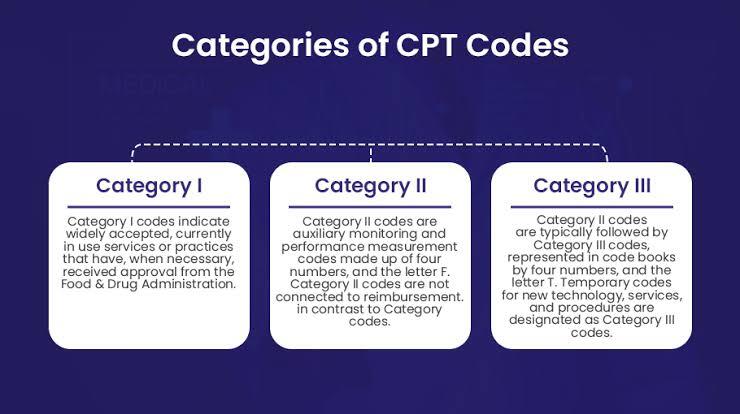
Categories of Codes for CPT
Healthcare professionals use several categories of codes for CPT.
Category I Codes
Report commonly performed medical procedures.
Category II Codes
Support quality measurement and performance reporting.
Category III Codes
Track emerging technologies and new procedures.
Each category serves a unique purpose within healthcare documentation and reimbursement.
How Codes for CPT Support Medical Billing
Medical billing relies heavily on accurate codes for CPT.
Key billing functions include:
Claim Submission
Report healthcare services accurately.
Insurance Processing
Enable payer review.
Payment Determination
Support reimbursement calculations.
Documentation Validation
Confirm medical necessity.
Compliance Monitoring
Reduce audit risks.
Correct coding improves reimbursement efficiency.
Documentation Requirements
Complete documentation is essential when assigning codes for CPT.
Important documentation includes:
Physician Notes
Describe services provided.
Procedure Reports
Support procedural coding.
Diagnostic Findings
Document clinical justification.
Treatment Plans
Explain ongoing care.
Medical Records
Maintain complete patient information.
Strong documentation supports coding accuracy.
Common Coding Mistakes
Healthcare providers should avoid frequent codes for CPT errors.
Examples include:
Incorrect Code Selection
Choose the most accurate procedure code.
Missing Documentation
Incomplete records weaken claims.
Modifier Errors
Apply modifiers appropriately.
Upcoding
Avoid reporting higher-level services without documentation.
Unbundling
Follow payer bundling rules.
Attention to detail reduces claim denials.
CPT Modifiers
Modifiers enhance codes for CPT by providing additional information about procedures.
Common purposes include:
Multiple Procedures
Report multiple services.
Professional Components
Identify physician interpretation.
Technical Components
Report equipment-related services.
Bilateral Procedures
Identify treatment on both sides.
Reduced Services
Reflect modified procedures.
Correct modifier usage improves claim accuracy.
Compliance and Codes for CPT
Compliance remains essential when using codes for CPT.
Best practices include:
Follow Official Guidelines
Use current coding references.
Conduct Internal Audits
Monitor coding accuracy.
Train Staff Regularly
Maintain coding knowledge.
Update Coding Resources
Review annual changes.
Maintain Complete Documentation
Support reported services.
Compliance protects healthcare organizations.
Technology Improves Coding Accuracy
Modern healthcare technology strengthens management of codes for CPT.
Helpful tools include:
- Electronic Health Records (EHR)
- Computer-Assisted Coding (CAC)
- Revenue Cycle Management Software
- Coding Reference Platforms
- Claims Scrubbing Software
- Analytics Dashboards
Technology reduces manual errors and improves efficiency.
Best Practices for Using Codes for CPT
Healthcare organizations can strengthen coding performance through proven strategies.
Verify Documentation
Review records carefully.
Use Current Coding Manuals
Stay updated annually.
Educate Providers
Improve documentation quality.
Monitor Denials
Identify recurring issues.
Perform Quality Audits
Strengthen coding compliance.
Continuous improvement enhances reimbursement.
Why Choose Icon Billing LLC
At Icon Billing LLC, we help healthcare providers maximize reimbursement through accurate application of codes for CPT and complete revenue cycle management.
Our professional services include:
- Medical billing
- Medical coding
- Insurance verification
- Prior authorization
- Credentialing
- Denial management
- Payment posting
- Accounts receivable follow-up
- Compliance consulting
- Revenue cycle management
Our experienced billing specialists work closely with physicians, hospitals, outpatient facilities, and specialty practices to improve coding accuracy, reduce denials, increase collections, and strengthen financial performance.
Future Trends in CPT Coding
Healthcare coding continues evolving alongside technology and regulatory changes.
Future developments affecting codes for CPT include:
Artificial Intelligence
Support coding accuracy.
Automation
Reduce manual data entry.
Predictive Analytics
Identify coding risks.
Enhanced Compliance Monitoring
Improve regulatory oversight.
Digital Health Expansion
Support telehealth and remote services.
Innovation will continue transforming medical coding.
Frequently Asked Questions
What are codes for CPT?
Codes for CPT are standardized procedure codes used to report medical, surgical, diagnostic, and healthcare services for billing and reimbursement purposes.
Why are codes for CPT important?
They provide standardized reporting, improve reimbursement accuracy, reduce claim denials, and support regulatory compliance.
Who uses codes for CPT?
Physicians, hospitals, outpatient clinics, medical coders, billing professionals, insurance companies, Medicare, and Medicaid all rely on codes for CPT.
How often are CPT codes updated?
The CPT code set is generally updated annually to reflect changes in medical practice and healthcare services.
Can incorrect codes for CPT affect reimbursement?
Yes. Coding errors may result in claim denials, payment delays, compliance concerns, or audits.
Why choose Icon Billing LLC?
Icon Billing LLC provides professional medical billing, coding, insurance verification, credentialing, prior authorization, denial management, compliance consulting, and revenue cycle management services that help healthcare providers maximize reimbursement while maintaining coding accuracy.
Conclusion
Understanding codes for-CPT is fundamental to accurate medical billing, coding compliance, and successful healthcare reimbursement. These standardized procedure codes enable healthcare providers, insurers, and government programs to communicate consistently while supporting efficient claims processing and payment determination. Proper application of codes for-CPT, combined with complete clinical documentation and adherence to current coding guidelines, significantly reduces claim denials and strengthens overall revenue cycle performance.
As healthcare regulations and coding standards continue to evolve, providers must remain committed to ongoing education, internal auditing, and technology adoption. Leveraging electronic health records, computer-assisted coding systems, claims editing tools, and revenue cycle analytics can improve coding accuracy while reducing administrative burdens and compliance risks.
At Icon Billing LLC, we are dedicated to helping healthcare organizations optimize the use of codes for-CPT through expert medical billing, coding, insurance verification, credentialing, prior authorization, denial management, and comprehensive revenue cycle management services. Our experienced professionals deliver customized solutions that improve operational efficiency, maximize reimbursement, strengthen compliance, and support the long-term financial success of your practice. Partner with Icon Billing LLC to transform your coding processes into a strategic advantage for sustainable healthcare growth.