
10 Powerful ICD 10 Code for CHF Coding Tips to Improve Accuracy and Avoid Costly Claim Denials
Accurate diagnosis coding is essential for successful medical billing, regulatory compliance, and timely reimbursement. Among the most commonly reported cardiovascular conditions in healthcare is congestive heart failure (CHF), making proper selection of the ICD 10 code for CHF an important responsibility for medical coders, billers, physicians, and healthcare organizations. Accurate coding helps support medical necessity, reduce claim denials, and improve documentation quality.
Congestive heart failure includes multiple clinical presentations, including systolic, diastolic, combined systolic and diastolic, acute, chronic, and acute-on-chronic heart failure. Because treatment, reimbursement, and quality reporting depend on clinical specificity, selecting the correct ICD 10 code for CHF requires detailed provider documentation and adherence to official ICD-10-CM coding guidelines.
This comprehensive guide explains everything healthcare professionals need to know about the ICD 10 code for CHF, including commonly used diagnosis codes, documentation standards, coding guidelines, reimbursement considerations, compliance requirements, and practical strategies for reducing claim denials.
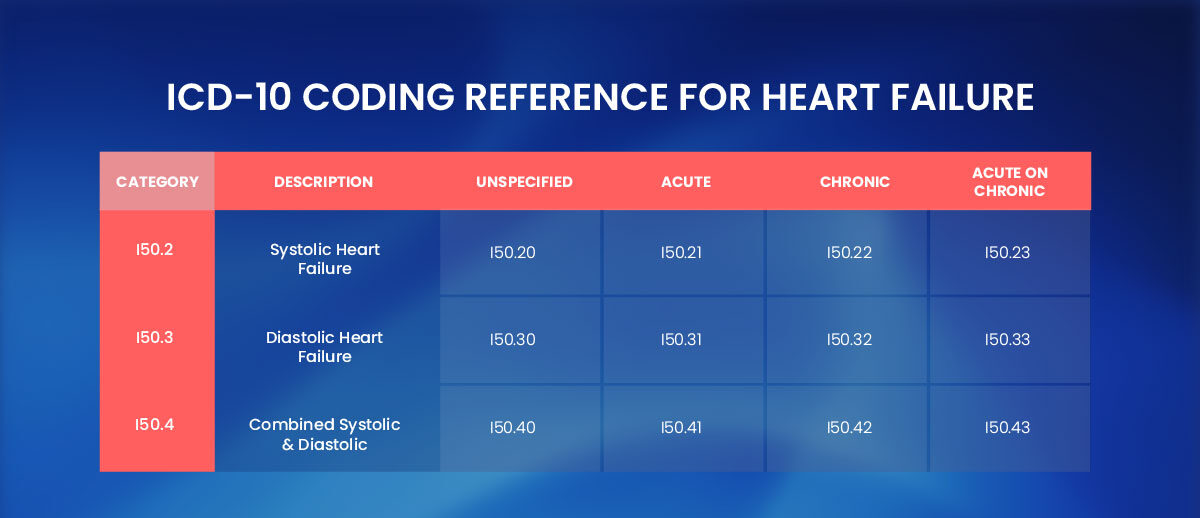
Understanding the ICD 10 Code for CHF
The phrase ICD 10 code for CHF commonly refers to the ICD-10-CM diagnosis codes used to report congestive heart failure and related heart failure conditions. The specific code depends on the provider’s documentation regarding the type and acuity of heart failure.
Rather than assigning a single generic code, coders should identify the most specific diagnosis supported by the medical record.
Examples of commonly reported ICD-10-CM heart failure codes include:
| ICD-10-CM Code | Description |
|---|---|
| I50.9 | Heart failure, unspecified |
| I50.20 | Unspecified systolic (congestive) heart failure |
| I50.21 | Acute systolic (congestive) heart failure |
| I50.22 | Chronic systolic (congestive) heart failure |
| I50.23 | Acute on chronic systolic (congestive) heart failure |
| I50.30 | Unspecified diastolic (congestive) heart failure |
| I50.40 | Unspecified combined systolic and diastolic heart failure |
Coders should always assign the most specific ICD 10 code for CHF supported by provider documentation and current ICD-10-CM guidelines.
Why Accurate ICD 10 Code for CHF Coding Matters
Correct selection of the ICD 10 code for CHF affects multiple aspects of healthcare operations, including reimbursement, quality reporting, compliance, and clinical communication.
Benefits of accurate coding include:
- Supports medical necessity
- Improves reimbursement accuracy
- Reduces claim denials
- Enhances quality reporting
- Improves documentation integrity
- Strengthens audit readiness
- Facilitates clinical data analysis
Accurate diagnosis coding also helps healthcare organizations meet payer expectations and regulatory requirements.
Documentation Requirements
Provider documentation should clearly identify:
- Type of heart failure
- Acuity (acute, chronic, acute on chronic)
- Systolic, diastolic, or combined dysfunction
- Underlying cause (when documented)
- Associated cardiovascular conditions
- Clinical findings
- Diagnostic testing
- Treatment plan
Specific documentation enables coders to select the most appropriate ICD 10 code for CHF and minimize coding ambiguity.
Common Coding Mistakes
Healthcare organizations frequently encounter claim issues because of coding errors.
Common mistakes include:
- Reporting unspecified heart failure when more detailed documentation exists
- Failing to capture acuity
- Omitting related diagnoses
- Using outdated documentation
- Ignoring physician clarification opportunities
- Not following official coding guidelines
Regular coding audits and provider education can significantly improve accuracy.
Best Practices for Medical Billers and Coders
Healthcare organizations should adopt these best practices:
- Review documentation carefully.
- Code to the highest level of specificity.
- Query providers when clarification is needed.
- Follow annual ICD-10-CM updates.
- Conduct internal coding audits.
- Monitor payer denial trends.
- Educate providers on documentation improvement.
- Maintain compliance with official coding guidelines.
These practices improve coding consistency and strengthen revenue cycle performance.
How Icon Billing LLC Supports Healthcare Providers
At Icon Billing LLC, we help healthcare organizations improve coding accuracy, optimize reimbursement, and strengthen compliance through professional medical billing and revenue cycle management services. Our experienced team works with providers to support documentation improvement, coding quality, denial management, credentialing assistance, and operational efficiency.
By combining experienced billing professionals with compliance-focused workflows, we help practices reduce administrative burdens while maximizing financial performance.
Frequently Asked Questions
What is the ICD 10 code for CHF?
The appropriate code depends on the documented type and acuity of heart failure. Healthcare providers should document the condition as specifically as possible to support accurate ICD-10-CM code selection.
Why is documentation important?
Detailed documentation supports accurate coding, demonstrates medical necessity, and improves reimbursement accuracy.
Should unspecified heart failure always be reported?
No. Coders should assign the most specific diagnosis supported by provider documentation whenever possible.
How often are ICD-10-CM codes updated?
ICD-10-CM codes are updated annually, making ongoing education essential.
How can practices reduce claim denials?
Strong documentation, accurate diagnosis coding, coder education, and routine compliance audits all contribute to lower denial rates.
How can Icon Billing LLC help?
Icon Billing LLC provides medical billing, coding support, denial management, credentialing assistance, and revenue cycle management services that help healthcare organizations improve financial performance.
Conclusion
Selecting the correct ICD 10 code for CHF is essential for compliant medical billing, accurate reimbursement, and effective clinical communication. By combining thorough provider documentation with current ICD-10-CM coding guidelines and proactive compliance practices, healthcare organizations can reduce claim denials, strengthen coding quality, and improve revenue cycle performance.
Partnering with Icon Billing LLC gives healthcare providers access to experienced billing professionals dedicated to improving coding accuracy, streamlining operations, and supporting long-term financial success.