Introduction
In the complex world of medical billing, modifier 25 plays a critical role in ensuring accurate reimbursement and compliance. Yet, despite its importance, modifier 25 is often misunderstood, misused, or overlooked—leading to denied claims, audits, and revenue loss.
For healthcare providers and billing professionals, mastering modifier 25 is essential. It allows providers to bill for a significant, separately identifiable evaluation and management (E/M) service on the same day as another procedure. When used correctly, modifier 25 ensures you get paid for the full scope of care provided.
However, incorrect use of modifier 25 can raise red flags with insurance companies and regulators. That’s why understanding its proper application is crucial for any medical practice aiming to maintain compliance and maximize revenue.
In this comprehensive guide, we’ll break down everything you need to know about modifier 25, including when to use it, common mistakes, real-world examples, and best practices for accurate billing.
What Is Modifier 25 and Why It Matters
Understanding the fundamentals of modifier 25 is the first step toward proper usage and compliance.
Definition and Purpose
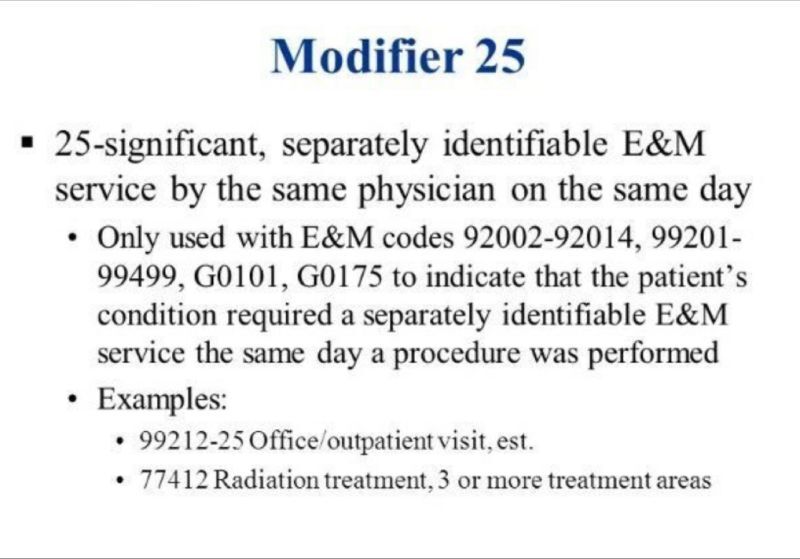
Modifier 25 is a CPT code modifier used to indicate that a significant, separately identifiable E/M service was performed by the same provider on the same day as another procedure or service. In simple terms, it tells payers that the visit involved more than just the procedure itself.
Without modifier 25, the insurance company may assume that the E/M service is included in the procedure and deny additional reimbursement.
Importance in Medical Billing
The correct use of modifier 25 ensures that healthcare providers are compensated fairly for their services. It helps distinguish between routine care associated with a procedure and additional medical evaluation that requires separate attention.
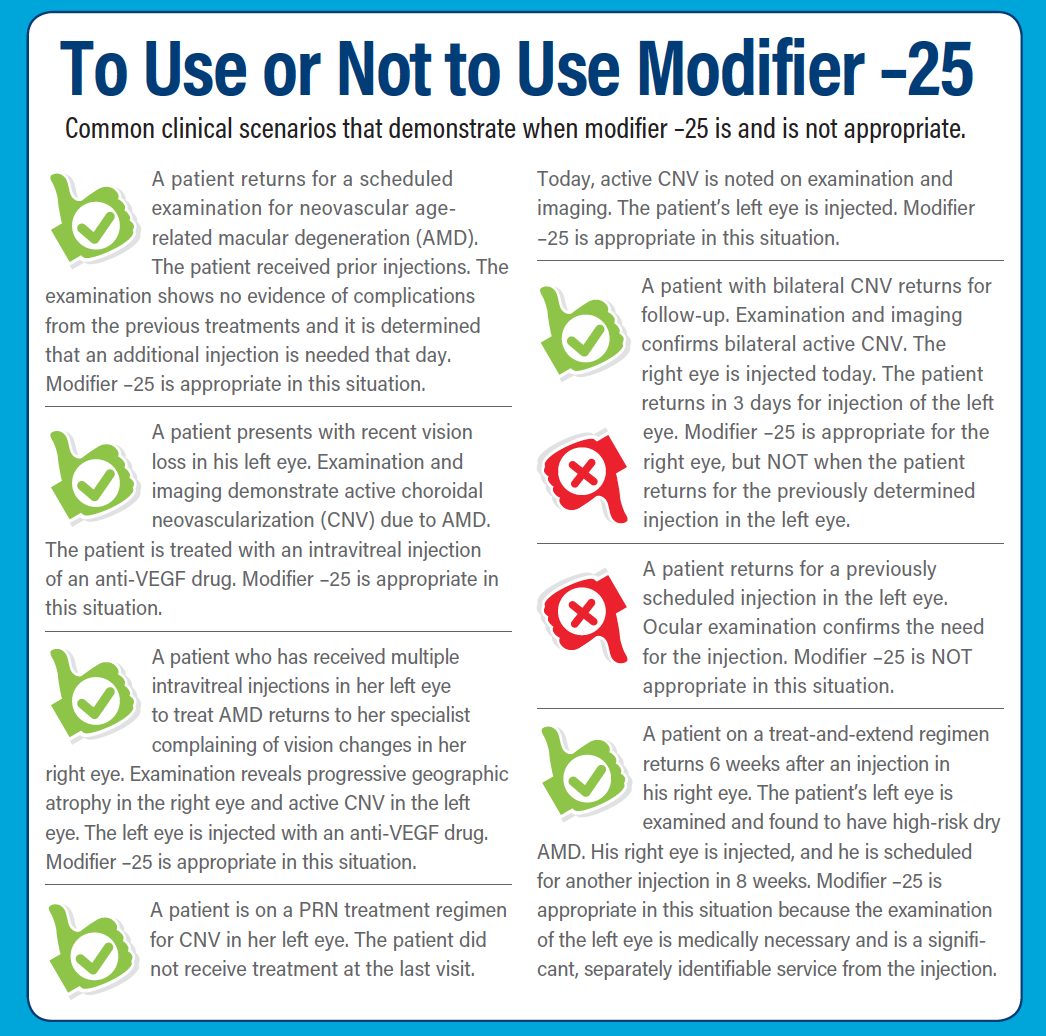
For example, if a patient comes in for a minor procedure but also presents new symptoms requiring evaluation, modifier 25 allows billing for both services appropriately.
Impact on Revenue Cycle
Improper use of modifier 25 can significantly impact a practice’s revenue cycle. Overuse may trigger audits, while underuse can lead to lost revenue. Striking the right balance is key.
When to Use Modifier 25 in Medical Billing
Knowing when to apply modifier 25 is critical for accurate claims submission.
Same-Day E/M and Procedure
Modifier 25 should be used when a provider performs an E/M service on the same day as a procedure, and the E/M service is significant and separately identifiable.
For instance, if a patient visits for a scheduled procedure but also requires evaluation of a new condition, modifier 25 may be appropriate.
Distinguishing Routine vs Separate Services
Not every E/M service qualifies for modifier 25. Routine pre- and post-procedure care is generally included in the procedure itself.
To justify modifier 25, documentation must clearly show that the E/M service went beyond the usual care associated with the procedure.
Documentation Requirements
Proper documentation is essential when using modifier 25. Providers must detail the separate nature of the E/M service, including history, examination, and medical decision-making.
Without strong documentation, claims with modifier 25 are more likely to be denied.
Common Mistakes to Avoid with Modifier 25
Despite its benefits, modifier 25 is often misused, leading to compliance risks and financial losses.
Overuse of Modifier 25
One of the most common errors is overusing modifier 25. Some practices apply it to almost every E/M service performed on the same day as a procedure.
This can trigger audits and scrutiny from payers.
Insufficient Documentation
Failing to provide adequate documentation is another major issue. Without clear evidence, the use of modifier-25 cannot be justified.
This often results in claim denials or recoupments.
Misunderstanding Guidelines
Many billing professionals misunderstand the guidelines for modifier-25, leading to incorrect application.
Regular training and updates are essential to ensure proper usage.
Real-World Examples of Modifier-25 Usage
Understanding practical scenarios can help clarify when to use modifier-25.
Example of Correct Usage
A patient visits a clinic for a minor surgical procedure but also complains of a new symptom requiring evaluation. The provider performs both services, documenting them separately.
In this case, modifier-25 is appropriate.
Example of Incorrect Usage
A patient comes in for a scheduled procedure, and the provider performs only routine pre-procedure evaluation. Using modifier-25 here would be incorrect.
Lessons from Case Studies
Real-world audits often reveal patterns of misuse. Learning from these cases can help practices improve compliance and avoid penalties related to modifier-25.
Best Practices for Using Modifier-25 Effectively
Implementing best practices ensures accurate billing and reduces risk.
Staff Training and Education
Regular training helps staff understand the correct use of modifier-25. Keeping up with payer guidelines is essential.
Internal Audits
Conducting periodic audits can identify errors and improve accuracy in using modifier-25.
Clear Documentation Protocols
Establishing strong documentation standards ensures that every use of modifier-25 is properly justified.
How Modifier-25 Impacts Compliance and Audits
Compliance is a major concern when using modifier-25.
Increased Scrutiny from Payers
Claims with modifier-25 are often reviewed more closely. Ensuring accuracy is critical to avoid issues.
Risk of Audits and Penalties
Improper use of modifier-25 can lead to audits, penalties, and even legal consequences.
Maintaining Compliance
Following guidelines and best practices helps maintain compliance and reduces risks associated with modifier-25.
Future Trends in Medical Billing and Modifier-25
The healthcare industry is evolving, and so is the use of modifier-25.
Automation and AI in Billing
Advanced technologies are improving accuracy in applying modifier-25 and reducing errors.
Changing Payer Policies
Payer requirements for modifier-25 continue to evolve. Staying updated is essential.
Increased Focus on Compliance
Regulators are placing greater emphasis on compliance, making proper use of modifier-25 more important than ever.
FAQs
What is modifier-25 used for?
Modifier-25 is used to indicate a significant, separately identifiable E/M service on the same day as another procedure.
Can modifier-25 be used for all procedures?
No, modifier-25 should only be used when the E/M service is separate and significant.
Why do claims with modifier-25 get denied?
Claims may be denied due to insufficient documentation or incorrect use of modifier-25.
How can I avoid audits related to modifier-25?
Proper documentation, training, and internal audits can reduce risks.
Is modifier-25 required for all same-day services?
No, modifier-25 is only required when the E/M service is distinct from the procedure.
Can modifier-25 increase revenue?
Yes, when used correctly, modifier-25 ensures proper reimbursement for additional services.
Conclusion
Mastering modifier-25 is essential for any medical practice aiming to improve billing accuracy and maximize revenue. While it offers significant benefits, improper use can lead to serious consequences.
By understanding when and how to use modifier-25, maintaining proper documentation, and following best practices, healthcare providers can avoid costly mistakes and ensure compliance.
At Icon Billing LLC, we specialize in helping practices navigate complex billing challenges, including the correct use of modifier-25. With the right expertise and strategy, your practice can optimize revenue while staying fully compliant.