7 Devastating DME Billing Mistakes That Destroy Your Revenue – Ultimate Fix Guide
Durable Medical Equipment (DME) billing is one of the most complex and heavily regulated areas of healthcare reimbursement. Unlike standard medical billing, DME billing involves a unique set of rules, documentation requirements, and payer policies that vary significantly from physician or hospital billing. Suppliers of wheelchairs, CPAP machines, hospital beds, prosthetics, and other equipment must navigate prior authorizations, certificates of medical necessity, competitive bidding programs, and strict medical necessity documentation. A single mistake in DME billing—a missing CMN, an incorrect HCPCS code, a failure to obtain prior authorization—can trigger claim denials, payment delays, and compliance audits that directly attack your business’s financial health. At Icon Billing LLC, we’ve seen DME suppliers lose hundreds of thousands of dollars because of preventable DME billing errors, and we’ve helped them recover.
This comprehensive guide will expose seven devastating DME billing mistakes that destroy your revenue and show you exactly how to avoid them. You’ll learn what DME billing really requires, how to select the correct codes for every item, how to navigate the complex rules for rentals and purchases, and how to build a billing workflow that produces clean claims. Whether you’re a DME supplier, a billing manager, or a professional supporting equipment providers, mastering DME billing is essential for financial survival. Let’s dive into the details and transform your DME billing from a vulnerability into a strength.
What Is DME Billing and Why Does It Matter?
DME billing refers to the specialized process of submitting claims for durable medical equipment—items that are primarily and customarily used to serve a medical purpose, are not useful in the absence of illness or injury, and can withstand repeated use. Common examples include wheelchairs, walkers, CPAP machines, oxygen equipment, hospital beds, infusion pumps, and prosthetics. DME billing is governed by Medicare’s Durable Medical Equipment, Prosthetics, Orthotics, and Supplies (DMEPOS) fee schedule, as well as commercial payer policies that often mirror Medicare’s rules. DME billing involves unique coding systems—HCPCS Level II codes rather than CPT codes—and specific modifiers that indicate whether an item is rented or purchased, new or used.
DME billing matters because the reimbursement rules are fundamentally different—and more complex—than other types of medical billing. Medicare and other payers scrutinize DME billing closely because of the high cost of equipment and the potential for fraud. The documentation requirements are stringent: a Certificate of Medical Necessity (CMN) or similar form must be completed by the treating physician, and the patient’s medical record must support the need for the equipment. Prior authorization is required for many items. Competitive bidding programs have changed reimbursement rates for certain product categories. Getting DME billing wrong means leaving money on the table, triggering audits, or facing recoupment demands. Understanding DME billing deeply is non-negotiable for any supplier serious about financial sustainability.
Devastating Mistake #1: Missing or Incomplete Certificate of Medical Necessity
The most common and devastating DME billing mistake is a missing or incomplete Certificate of Medical Necessity (CMN). The CMN is a form completed by the treating physician that documents the patient’s medical condition and the need for the specific equipment. For many items, including CPAP devices, wheelchairs, and hospital beds, a CMN or similar documentation is required for reimbursement. If the CMN is missing, incomplete, or not signed by the physician, the claim will be denied. Even if the equipment was medically necessary, the lack of proper documentation means no payment.
The solution is rigorous CMN management. Your DME billing process should include obtaining a completed, signed CMN before dispensing equipment or submitting the claim. The CMN must be accurate, consistent with the patient’s medical record, and specific to the equipment ordered. Icon Billing LLC’s DME billing specialists understand the CMN requirements for every product category. We work with suppliers and physicians to ensure that every CMN is complete, signed, and submitted correctly. We eliminate one of the most frequent causes of DME denials.
Devastating Mistake #2: Failing to Obtain Prior Authorization for DME Items
Many DME items require prior authorization from Medicare, Medicaid, or commercial payers before they can be dispensed. Failing to obtain prior authorization before delivering equipment is a devastating DME billing mistake that results in denied claims and unreimbursed costs. Some suppliers assume that authorization isn’t required for certain items, only to discover after the fact that the payer demanded pre-approval. Others obtain authorization but fail to document it properly, leaving the claim vulnerable to denial.
The solution is proactive authorization management. Before dispensing any DME item, verify the payer’s prior authorization requirements and obtain authorization when needed. Document the authorization number and include it on the claim. Track authorization expiration dates and renew them before they lapse. Icon Billing LLC manages prior authorization for DME billing clients, ensuring that every item is properly authorized before it’s delivered. We prevent the denials and lost revenue that occur when authorization is missing.
Devastating Mistake #3: Using Incorrect HCPCS Codes in DME Billing
DME billing uses HCPCS Level II codes to identify equipment and supplies. These codes are highly specific: a wheelchair has different codes for standard, lightweight, and custom models; a CPAP machine has codes for the device and for the mask and tubing separately. A devastating DME billing mistake is using the wrong HCPCS code—or using a code that doesn’t match the item dispensed. This error results in denials or incorrect reimbursement. For example, billing a standard wheelchair code when a custom wheelchair was provided will result in underpayment.
The solution is meticulous code selection. Your DME billing team must understand the HCPCS codes for every item you dispense and verify that the code matches the equipment provided. Icon Billing LLC’s DME billing specialists are experts in HCPCS coding. We review every claim to ensure the correct code is used, eliminating one of the most common causes of denials. We also stay current on code changes and updates.
Devastating Mistake #4: Inadequate Documentation of Medical Necessity
Documentation is the foundation of DME billing. The patient’s medical record must support the need for the equipment—the diagnosis, the duration of need, and the functional limitations that the equipment addresses. A devastating DME billing mistake is inadequate documentation: a physician’s note that says “patient needs wheelchair” without detailing why, or a CMN that lacks specific clinical information. Inadequate documentation leads to denials, audits, and recoupments.
The solution is robust documentation protocols. Work with physicians to ensure that their notes and CMNs include the specific medical necessity information that payers require. Documentation must clearly state the patient’s condition, the equipment needed, and why it is medically necessary. Icon Billing LLC helps DME suppliers implement documentation improvement programs that enhance DME billing accuracy. We provide templates, training, and feedback that close the gap between clinical care and billing compliance.
Devastating Mistake #5: Mishandling Capped Rental vs. Purchase in DME Billing
Many DME items, such as wheelchairs and hospital beds, are reimbursed on a capped rental basis—Medicare pays a monthly rental fee for a set period (typically 13 months), after which ownership transfers to the patient. Other items are purchased outright. A devastating DME billing mistake is mishandling the rental versus purchase distinction. Billing a purchase code when the item is a rental, or failing to track the capped rental period correctly, results in denials or incorrect payment.
The solution is understanding the rental and purchase rules for each item. Your DME billing system must track the rental period, submit monthly claims correctly, and transition to purchase when the capped rental period ends. Icon Billing LLC’s DME billing specialists understand the capped rental rules. We manage rental billing for our clients, ensuring that monthly claims are submitted correctly and that ownership transitions are handled properly. We prevent the errors that occur when rental and purchase rules are confused.
Devastating Mistake #6: Ignoring Competitive Bidding Program Rules
Medicare’s Competitive Bidding Program sets payment rates for certain DME items in designated areas. Suppliers must be enrolled in the program and must accept the competitive bidding rates for those items. A devastating DME-billing mistake is ignoring competitive bidding rules—billing at higher rates, dispensing items without being enrolled, or failing to verify that the patient’s address is in a competitive bidding area. These errors result in denied claims and compliance violations.
The solution is knowledge of competitive bidding requirements. Verify that you are enrolled in the program for the items you dispense. Confirm that the patient’s address falls within a competitive bidding area. Apply the correct rates to your claims. Icon Billing LLC helps DME suppliers navigate competitive bidding rules. We track program updates, verify enrollment, and ensure that DME-billing claims comply with competitive bidding requirements. We protect your revenue and your compliance.
Devastating Mistake #7: Failing to Stay Current with DME Billing Rules and Payer Policies
The DME-billing landscape is constantly evolving. Medicare updates fee schedules and documentation requirements annually. Commercial payers update their own DME-billing policies, often without notice. New HCPCS codes are introduced, prior authorization requirements shift, and competitive bidding areas change. A devastating mistake is assuming that once your billing team knows the DME-billing rules, they know them forever. Without ongoing education, coders fall behind on changes, and denials increase.
The solution is continuous investment in DME-billing education. Billing staff should receive regular training on code updates, payer policies, and documentation requirements. Icon Billing LLC provides ongoing DME-billing education as part of our comprehensive services. Our billing specialists are certified, current, and continuously learning. When you partner with us, you gain access to a team that treats DME-billing as a dynamic, evolving discipline—not a static skill.
Building a Winning DME Billing Workflow
Now that the mistakes are clear, here is the proactive DME-billing workflow Icon Billing LLC follows:
-
Verify Eligibility and Benefits. Confirm coverage, prior authorization requirements, and patient responsibility before dispensing equipment.
-
Obtain Prior Authorization. Secure authorization for items that require it and document the authorization number.
-
Obtain a Complete CMN. Ensure the Certificate of Medical Necessity is completed, signed, and consistent with the medical record.
-
Assign Correct HCPCS Codes. Use the specific codes that match the item dispensed.
-
Document Medical Necessity. Ensure clinical documentation supports the need for the equipment.
-
Handle Rentals and Purchases Correctly. Track capped rental periods and transition to purchase when appropriate.
-
Comply with Competitive Bidding. Verify enrollment and apply correct rates for competitive bidding areas.
-
Perform Pre-Bill Audits. Review DME-billing claims before submission to catch errors.
-
Track Denials by Root Cause. Analyze denied claims to identify DME-billing error patterns.
This workflow transforms DME-billing from a confusing chore into a structured, reliable process. Icon Billing LLC executes it daily for DME suppliers, producing clean claims and healthy revenue.
How Icon Billing LLC Transforms DME Billing Success
When you partner with Icon Billing LLC, you gain a team of billing specialists who understand the nuances of DME-billing. Our services include:
-
Comprehensive coding audits to identify DME-billing errors and missed revenue opportunities.
-
Pre-bill claim scrubbing that catches DME-billing mistakes before submission.
-
Denial management that recovers revenue from incorrectly coded claims.
-
Provider education that improves documentation and DME-billing accuracy.
-
Payer policy tracking that keeps your DME-billing current with changing requirements.
-
Prior authorization management for DME items.
-
CMN management to ensure complete, signed documentation.
Our goal is to make DME-billing a strength of your business, not a source of anxiety. We’ve helped DME suppliers improve clean claim rates, reduce denials, and recover lost revenue through disciplined DME-billing management.
Real-World Consequences of DME-Billing Errors
Consider these composite examples based on cases we’ve encountered:
Scenario 1: A DME supplier dispensed CPAP machines without obtaining a completed CMN, resulting in a 40% denial rate. Icon Billing LLC implemented CMN management, obtained the required documentation, and reduced denials to under 5%.
Scenario 2: A supplier billed a wheelchair purchase code when the item was a capped rental, triggering a payer audit and recoupment of $65,000. Icon Billing LLC corrected the coding and established rental tracking to prevent recurrence.
Scenario 3: A DME supplier ignored competitive bidding rules and billed at higher rates for items in a competitive bidding area. Claims were denied, and the supplier faced compliance penalties. Icon Billing LLC corrected the billing and ensured compliance with competitive bidding requirements.
In each case, disciplined DME-billing management would have prevented the loss. Icon Billing LLC exists to ensure your business never suffers from these preventable errors.
Frequently Asked Questions About DME-Billing
Q: What is a Certificate of Medical Necessity (CMN) and when is it required?
A: The CMN is a form completed by the treating physician that documents the need for DME. It is required for many items, including CPAP devices, wheelchairs, and hospital beds. DME-billing without a complete CMN will result in denial.
Q: Do all DME items require prior authorization?
A: No, but many do. Verify requirements with each payer before dispensing equipment. Icon Billing LLC manages prior authorization for DME-billing clients.
Q: How do I code a capped rental item in DME-billing?
A: Use the rental HCPCS codes and submit monthly claims for the capped rental period. After the capped period, ownership transfers, and no further rental claims are submitted. DME-billing systems must track these periods.
Q: What is the competitive bidding program and how does it affect DME-billing?
A: The program sets payment rates for certain DME items in designated areas. Suppliers must be enrolled and must accept the rates. DME-billing must comply with these rules.
Q: How can Icon Billing LLC help with DME-billing?
A: We provide coding audits, pre-bill scrubbing, denial management, prior authorization, CMN management, provider education, and compliance support for DME-billing.
Proactive Steps You Can Take Today
-
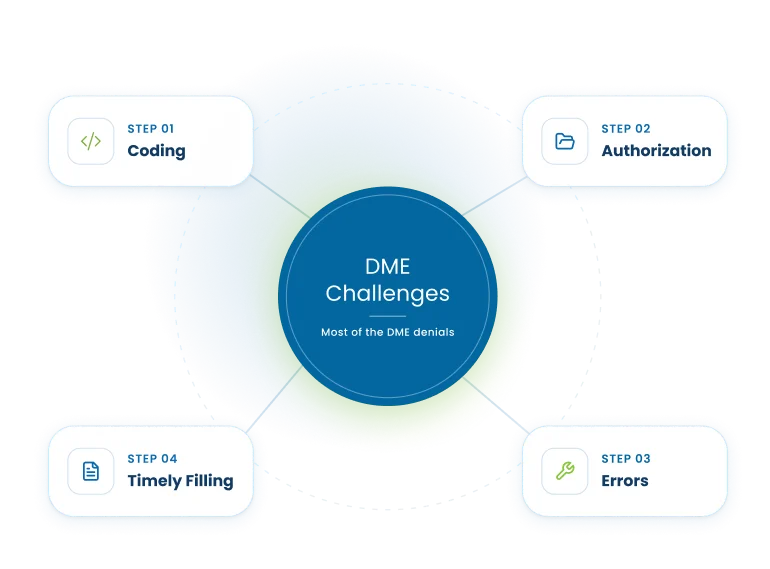
Audit your recent DME claims to identify error patterns. Look for missing CMNs, incorrect HCPCS codes, and prior authorization gaps.
-
Review your CMN process. Ensure every item requiring a CMN has a complete, signed form before dispensing.
-
Verify prior authorization requirements. Check payer policies for your top payers and ensure compliance.
-
Contact Icon Billing LLC for a comprehensive DME-billing audit. We’ll identify errors, recover lost revenue, and implement corrective actions.
Conclusion: Master DME Billing for Maximum Reimbursement
The seven devastating mistakes—missing CMNs, missing prior authorization, incorrect HCPCS codes, inadequate documentation, mishandling rentals, ignoring competitive bidding, and neglecting ongoing education—are all avoidable with knowledge and discipline. DME-billing is complex, but it’s a complexity that can be mastered. With the right training, the right processes, and the right partner, your business can submit clean, accurate, and compliant claims every time.
Icon Billing LLC is dedicated to making DME-billing a strength of your business. We bring the knowledge, the processes, and the vigilance needed to protect your revenue and keep your claims flowing. Don’t let preventable DME-billing errors drain your business’s financial health. Contact us today to learn how our DME-billing management service can improve your clean claim rates, reduce denials, and maximize reimbursement. Your DME business provides essential equipment to patients—your business deserves to be paid fully for that equipment. With the right DME-billing strategy, you can ensure that happens.