HCPCS Codes: The Complete Guide for Accurate Medical Billing
When it comes to modern healthcare billing, hcpcs codes play a critical role in ensuring accuracy, compliance, and timely reimbursement. Whether you’re a provider, billing specialist, or healthcare organization like Icon Billing LLC, understanding hcpcs codes is essential for smooth operations.
In this comprehensive guide, we’ll explore everything you need to know about hcpcs codes, including their types, benefits, real-world applications, and common errors you must avoid.
What Are HCPCS Codes?
HCPCS codes (Healthcare Common Procedure Coding System) are standardized codes used in the healthcare industry to describe medical procedures, services, supplies, and equipment. These codes are essential for billing Medicare, Medicaid, and other insurance providers.
Unlike CPT codes, which focus primarily on physician services, hcpcs codes cover a broader range of non-physician services, including ambulance rides, durable medical equipment, and outpatient services.
Key Characteristics of HCPCS Codes
- Used for billing and claims processing
- Essential for Medicare and Medicaid reimbursement
- Covers supplies, equipment, and services not included in CPT
- Updated regularly for compliance
Understanding hcpcs codes ensures that healthcare providers receive accurate reimbursements while maintaining regulatory compliance.
Types of HCPCS Codes
There are two primary levels of hcpcs codes, and each serves a distinct purpose in medical billing.
Level I HCPCS Codes (CPT Codes)
Level I codes are identical to CPT codes and are used to describe medical procedures and services performed by healthcare providers.
- Managed by the American Medical Association
- Includes surgeries, consultations, and diagnostic services
- Numeric format (e.g., 99213)
Although these are technically part of hcpcs codes, they are commonly referred to as CPT codes.
Level II HCPCS Codes
Level II hcpcs codes are alphanumeric and are used for non-physician services.
Examples include:
- Ambulance services
- Prosthetics and orthotics
- Medical supplies (e.g., wheelchairs, oxygen)
- Drugs administered outside physician settings
These hcpcs codes are crucial for billing services that are not covered under CPT.
Why HCPCS Codes Are Important in Medical Billing
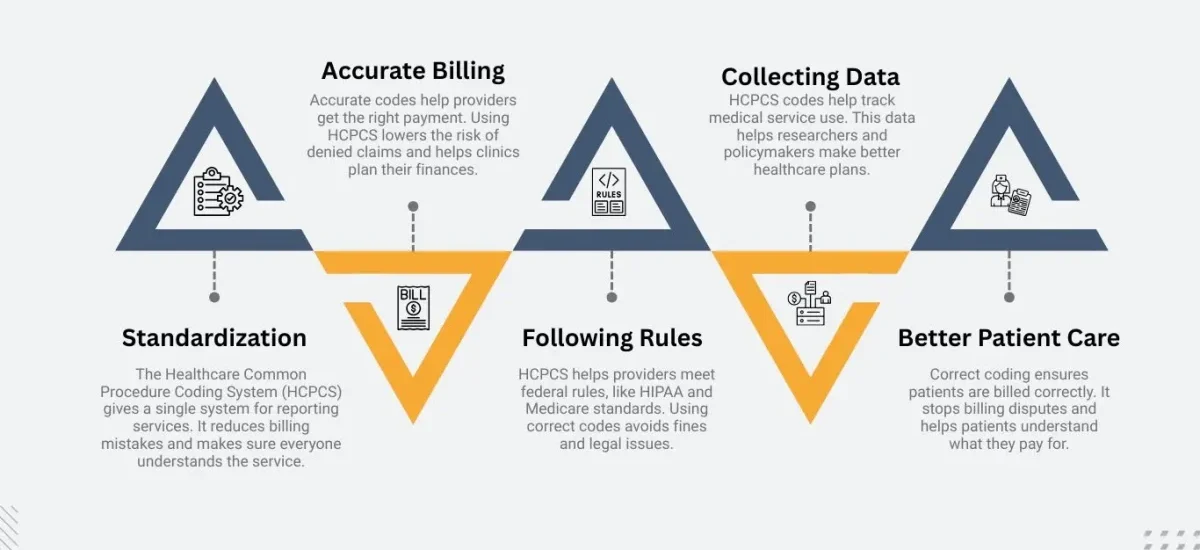
The importance of hcpcs codes cannot be overstated. They form the backbone of accurate medical billing and revenue cycle management.
Ensures Accurate Reimbursement
Using correct hcpcs codes ensures that healthcare providers receive proper compensation for their services. Incorrect coding can lead to claim denials or underpayments.
Supports Compliance
Healthcare regulations require strict adherence to coding standards. Proper use of hcpcs codes helps avoid audits and penalties.
Improves Billing Efficiency
Standardized hcpcs codes streamline the billing process, making it easier for insurance companies to process claims quickly.
Enhances Data Tracking
Healthcare organizations rely on hcpcs codes to analyze trends, track services, and improve patient care outcomes.
Common Uses of HCPCS Codes
Understanding where and how hcpcs codes are used can help billing professionals maximize efficiency.
Medical Supplies and Equipment
Items like wheelchairs, hospital beds, and oxygen tanks are billed using hcpcs-codes.
Ambulance Services
Emergency transportation services rely heavily on hcpcs-codes for billing.
Outpatient Services
Many outpatient treatments and procedures require accurate hcpcs-codes for reimbursement.
Medications
Certain drugs, especially those administered in clinical settings, are billed using hcpcs-codes.
Common Mistakes to Avoid with HCPCS-Codes
Even experienced billing professionals can make errors when using hcpcs-codes. Avoiding these mistakes can save time, money, and compliance issues.
Using Outdated Codes
HCPCS-codes are updated annually. Using outdated codes can result in claim denials.
Incorrect Code Selection
Choosing the wrong hcpcs-codes can lead to underpayment or overbilling.
Lack of Documentation
Proper documentation is essential to support the use of hcpcs-codes.
Ignoring Modifiers
Modifiers provide additional information about services. Missing modifiers can affect reimbursement.
Best Practices for Using HCPCS-Codes
To maximize the benefits of hcpcs-codes, follow these proven best practices.
Stay Updated
Regularly review updates to hcpcs-codes to ensure compliance.
Invest in Training
Continuous education helps billing staff understand the nuances of hcpcs-codes.
Use Billing Software
Modern billing systems can help automate and validate hcpcs-codes.
Conduct Audits
Regular audits ensure that hcpcs-codes are used correctly and consistently.
How HCPCS-Codes Impact Revenue Cycle Management
Effective use of hcpcs-codes directly influences a healthcare organization’s financial health.
Faster Claim Processing
Accurate hcpcs-codes reduce claim rejections and speed up reimbursements.
Reduced Errors
Proper coding minimizes billing errors and improves efficiency.
Better Financial Reporting
Using standardized hcpcs-codes helps generate reliable financial data.
HCPCS-Codes vs CPT Codes: Key Differences
While often confused, hcpcs-codes and CPT codes serve different purposes.
| Feature | HCPCS-Codes | CPT Codes |
|---|---|---|
| Scope | Broad (includes supplies & services) | Physician services only |
| Format | Alphanumeric (Level II) | Numeric |
| Usage | Medicare & Medicaid | General medical billing |
Understanding these differences ensures proper use of hcpcs-codes in various billing scenarios.
Future of HCPCS-Codes in Healthcare
The role of hcpcs-codes is evolving with advancements in healthcare technology.
Integration with AI
Artificial intelligence is improving the accuracy of hcpcs-codes.
Automation
Automated systems are reducing manual errors in coding.
Regulatory Changes
Healthcare reforms continue to influence how hcpcs-codes are used.
FAQs
What are hcpcs-codes used for?
HCPCs-codes are used to bill healthcare services, supplies, and equipment, especially for Medicare and Medicaid.
How often are hcpcs-codes updated?
HCPCS-codes are updated annually to reflect changes in healthcare practices and regulations.
What is the difference between Level I and Level II hcpcs-codes?
Level I refers to CPT codes, while Level II covers non-physician services like equipment and supplies.
Why are hcpcs-codes important?
They ensure accurate billing, compliance, and proper reimbursement.
Can incorrect hcpcs-codes lead to claim denial?
Yes, incorrect or outdated hcpcs-codes are a common reason for claim denials.
Who uses hcpcs-codes?
Healthcare providers, billing companies like Icon Billing LLC, and insurance companies use hcpcs-codes.
Conclusion
In the complex world of medical billing, hcpcs-codes are indispensable. From ensuring accurate reimbursement to maintaining compliance, their importance cannot be overstated. By understanding the types, uses, and best practices of hcpcs-codes, healthcare providers and billing professionals can significantly improve their revenue cycle management.
For organizations like Icon Billing LLC, mastering hcpcs-codes is not just an advantage—it’s a necessity for success in today’s competitive healthcare landscape.