
Introduction to ICD-10 Tick Bite Codes
Tick bites are common occurrences, especially in areas where ticks are prevalent, and they can lead to serious conditions if not properly diagnosed and treated. In the medical billing world, using the correct ICD-10 code for a tick bite is essential for accurate billing, insurance claims, and medical record-keeping.
In this blog post, we will delve into the significance of the ICD-10 tick bite code, the proper usage of these codes, and how to ensure that both healthcare providers and billing professionals have a clear understanding of the proper diagnosis and billing process when it comes to tick bites. Whether you’re a healthcare provider, a billing professional, or someone looking to understand the process, this guide will help you navigate the complexities of ICD-10 tick bite codes with ease.
What is ICD-10 and Why is it Important for Tick Bites?
The ICD-10 (International Classification of Diseases, 10th edition) is a standardized system used by healthcare providers worldwide to code diagnoses and procedures. These codes allow for clear communication between healthcare providers, insurers, and patients, ensuring that treatments, diagnoses, and services are accurately documented and billed.
When it comes to tick bites, the ICD-10 coding system provides specific codes that categorize different types of tick bites and the potential diseases they may lead to. These codes are critical for proper diagnosis and treatment, but they also play a crucial role in medical billing. Incorrect coding can lead to claim denials, delays in reimbursement, and unnecessary administrative headaches for healthcare providers.
Common ICD-10 Codes for Tick Bites
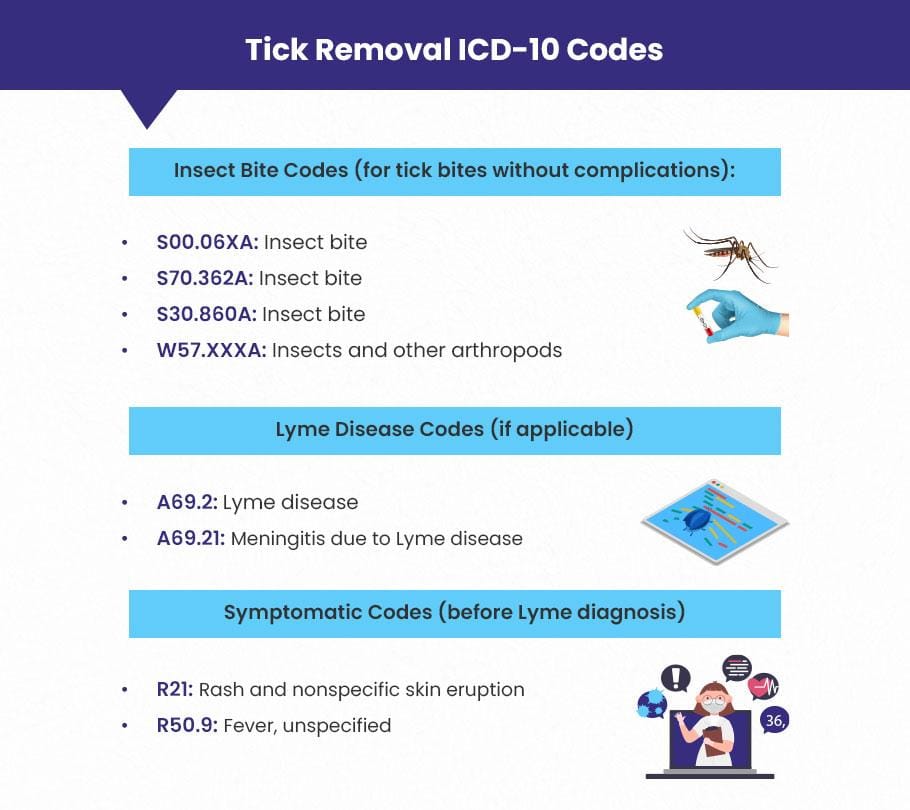
The ICD-10 tick bite codes fall under the broader category of “Insect bites and stings” (Chapter 19 of ICD-10, codes W57-W64). Let’s take a look at some of the primary codes used for tick bites and related conditions.
1. W57.XXXA – Bitten by tick, initial encounter
This is the primary code for a tick bite. It is used when a patient is seen by a healthcare provider for an initial evaluation after being bitten by a tick. This code should be used when there is no immediate evidence of infection or tick-borne illness, and the patient is simply receiving treatment for the bite itself.
2. W57.XXXD – Bitten by tick, subsequent encounter
This code is used when a patient returns for follow-up care after an initial encounter for a tick bite. It is used in cases where the tick bite has been treated, and the patient is returning for further evaluation or treatment related to the bite.
3. A69.20 – Lyme disease, unspecified
While not specifically a tick bite code, A69.20 is commonly used when a patient develops Lyme disease after being bitten by a tick. Lyme disease is one of the most common diseases transmitted by ticks, and patients may experience symptoms such as fever, rash, and joint pain. This code helps identify patients who require additional treatment or monitoring for Lyme disease following a tick bite.
4. A77.0 – Tick-borne rickettsiosis
Rickettsiosis is another tick-borne illness that may require a different code, depending on the severity of symptoms and the specific strain of bacteria involved. A77.0 is used when the diagnosis is made and treatment is needed.
How Tick Bites Lead to Disease and the Role of ICD-10 Codes
Tick bites can lead to several diseases, which are categorized under different ICD-10 codes. While Lyme disease is the most well-known condition linked to tick bites, other diseases like Rocky Mountain spotted fever, babesiosis, and anaplasmosis are also transmitted through ticks. As tick-borne diseases increase in prevalence, accurate diagnosis and proper use of ICD-10 tick bite codes become even more critical.
When billing for a tick bite, it is important to not only identify the bite itself but also any potential secondary conditions, such as Lyme disease or rickettsiosis. Using the correct ICD-10 codes will help healthcare providers ensure proper treatment and will assist billing professionals in submitting accurate claims to insurance companies.
For example, a patient who presents with a tick bite and develops a fever or rash may be suspected of having Lyme disease. The healthcare provider may need to use the ICD-10 Lyme disease code alongside the ICD-10 tick bite code for a complete and accurate diagnosis.
Common Billing Mistakes with ICD-10 Tick Bite Codes
Accurate coding is essential in ensuring that healthcare providers receive timely reimbursement and that insurance claims are not delayed. When it comes to ICD-10 tick bite codes, there are several common mistakes that medical billers should avoid.
1. Incorrect Code Usage
One of the most common mistakes is using the wrong ICD-10 code for the tick bite or its associated condition. For example, using a code for a different insect bite, like a mosquito bite, could result in incorrect billing and a delay in claims processing. It’s important to ensure that the correct code is used for the type of bite and any resulting disease or complication.
2. Not Using the Correct Encounter Type
As mentioned earlier, there are different codes for initial and subsequent encounters. Using the wrong encounter code can lead to issues with the insurance claim. Be sure to select either the initial encounter (W57.XXXA) or subsequent encounter (W57.XXXD) code depending on the patient’s visit history.
3. Failing to Account for Tick-Borne Diseases
If a patient is diagnosed with a tick-borne disease following a tick bite, such as Lyme disease or rickettsiosis, the correct secondary codes must be included in the billing. Failing to account for these conditions could result in claim denials or under-reimbursement.
4. Not Documenting All Symptoms
When a patient presents with a tick bite, it’s important to document all symptoms, even those that seem unrelated, such as fever, headache, or rash. These symptoms could indicate a secondary condition that requires additional coding and treatment. Accurate documentation ensures that the correct codes are used for both the bite and any resulting illnesses.
Best Practices for Billing ICD-10 Tick Bite Codes
To avoid billing issues and ensure that claims are processed efficiently, healthcare providers and billing professionals should follow these best practices when dealing with ICD-10 tick bite codes:
1. Accurate Documentation
Accurate and thorough documentation is the foundation of successful medical billing. Be sure to record detailed information about the tick bite, including when it occurred, the patient’s symptoms, and any diagnoses made during the visit.
2. Use of Correct Codes for Encounter Type
Ensure that you are using the correct ICD-10 code for the type of encounter—whether it’s an initial or subsequent visit. This distinction is critical for billing accuracy.
3. Inclusion of Secondary Diagnoses
When applicable, be sure to include any secondary diagnoses, such as Lyme disease or Rocky Mountain spotted fever, alongside the primary ICD-10 tick bite code. This ensures comprehensive coverage of the patient’s condition and appropriate reimbursement.
4. Keep Up-to-Date with ICD-10 Updates
ICD-10 codes can change over time as new conditions are discovered and classifications are updated. Stay informed about any changes to the ICD-10 tick bite codes to avoid using outdated or incorrect codes.
Conclusion
Understanding the proper use of ICD-10 tick bite codes is essential for accurate diagnosis, treatment, and medical billing. Whether you are a healthcare provider diagnosing a patient, or a medical biller submitting claims, ensuring that the correct code is used for a tick bite is critical for smooth and efficient processes. By familiarizing yourself with the various ICD-10 tick bite codes and adhering to best practices in documentation and billing, you can avoid common mistakes and ensure that claims are processed successfully.
If you need assistance with medical billing, whether it’s for ICD-10 tick bite codes or any other diagnoses, Icon Billing LLC is here to help. Our experienced team of billing professionals is ready to provide expert services to streamline your medical billing process and ensure that your healthcare practice operates efficiently.