
15 Powerful Cardioversion CPT Code Tips: Avoid Costly Billing Errors and Maximize Reimbursement
Introduction
Accurate procedural coding is essential for healthcare providers seeking timely reimbursements and regulatory compliance. Among cardiovascular procedures, selecting the correct cardioversion cpt code is particularly important because insurers require detailed documentation to support medical necessity, procedural accuracy, and proper reimbursement. Even minor coding errors can result in claim denials, delayed payments, compliance issues, and unnecessary administrative work.
Cardioversion is a medical procedure used to restore a patient’s normal heart rhythm when abnormal cardiac rhythms such as atrial fibrillation, atrial flutter, or certain types of supraventricular tachycardia are present. Depending on the patient’s condition, cardioversion may be performed using synchronized electrical shocks or medications. From a medical billing perspective, understanding the appropriate cardioversion cpt code ensures that healthcare providers accurately report the service performed while complying with payer policies and documentation requirements.
Medical coders and billing professionals must carefully review operative reports, physician documentation, anesthesia records, diagnosis codes, and payer-specific billing guidelines before assigning the correct cardioversion cpt code. Coding professionals also need to understand related services, modifiers, National Correct Coding Initiative (NCCI) edits, Medicare policies, and insurance carrier requirements to reduce denials and maximize reimbursement.
At Icon Billing LLC, we help cardiology practices, hospitals, ambulatory surgery centers, physician groups, and healthcare organizations improve coding accuracy, streamline claim submission, reduce denials, and optimize revenue cycle management. In this comprehensive guide, you’ll learn everything about cardioversion cpt code, including coding principles, documentation requirements, billing considerations, compliance standards, common mistakes, and best practices that improve financial performance while maintaining regulatory compliance.
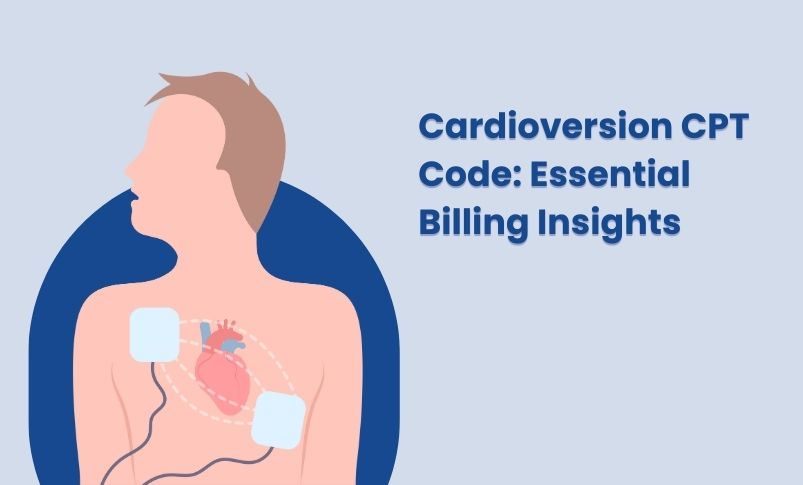
What Is a Cardioversion CPT Code?
A cardioversion cpt code is a Current Procedural Terminology (CPT) code used to report cardioversion procedures performed to restore a normal heart rhythm.
Healthcare providers use the appropriate cardioversion cpt code to:
- Report performed procedures
- Submit insurance claims
- Support medical necessity
- Document patient care
- Obtain reimbursement
- Maintain compliance
- Improve revenue cycle management
- Track clinical services
Accurate coding begins with complete clinical documentation.
Understanding Cardioversion Procedures
Before assigning a cardioversion cpt code, coders should understand the procedure performed.
Cardioversion may involve:
Electrical Cardioversion
A synchronized electrical shock restores normal rhythm.
Pharmacologic Cardioversion
Medications are used to correct abnormal heart rhythms.
Elective Procedures
Performed after patient evaluation and preparation.
Emergency Procedures
Performed urgently for unstable patients.
Proper documentation determines which services may be reported.
Why Accurate Cardioversion CPT Code Selection Matters
Selecting the correct cardioversion cpt code provides several benefits.
Reduce Claim Denials
Correct coding improves payer acceptance.
Support Medical Necessity
Documentation justifies the procedure.
Improve Reimbursement
Clean claims process faster.
Maintain Compliance
Accurate coding follows payer regulations.
Reduce Audit Risk
Complete documentation supports billed services.
Coding accuracy strengthens financial performance.
Documentation Requirements for Cardioversion CPT Code
Complete documentation supports every cardioversion cpt code submitted.
Medical records should include:
Patient Diagnosis
Underlying cardiac condition.
Clinical Indication
Reason for cardioversion.
Procedure Details
Electrical or pharmacologic method.
Sedation Documentation
If applicable.
Physician Notes
Complete procedural summary.
Detailed documentation supports coding accuracy and reimbursement.
Medical Necessity and Cardioversion CPT Code
Insurance carriers review medical necessity before approving reimbursement.
Documentation should demonstrate:
Symptoms
Patient presentation.
Diagnostic Testing
Electrocardiogram findings.
Failed Conservative Treatment
When applicable.
Clinical Decision-Making
Why cardioversion was appropriate.
Expected Outcomes
Treatment goals.
Medical necessity is essential for claim approval.
Common Billing Challenges
Healthcare organizations often encounter billing issues involving the cardioversion cpt code.
Common problems include:
Incomplete Documentation
Missing procedural details.
Incorrect Diagnosis Codes
Diagnosis must support treatment.
Modifier Errors
Improper modifier use.
Duplicate Billing
Avoid multiple submissions.
Coding Omissions
Missing related services.
Preventing these issues improves reimbursement.
Cardioversion CPT Code and Medical Billing
Medical billing professionals should carefully review every cardioversion cpt code claim.
Billing workflow includes:
Insurance Verification
Confirm patient coverage.
Coding Review
Validate diagnosis and procedure codes.
Claim Submission
Submit complete documentation.
Payment Posting
Track reimbursements.
Denial Management
Resolve payer issues.
Efficient billing improves revenue cycle performance.
Medicare Compliance and Cardioversion CPT Code
Providers treating Medicare beneficiaries must maintain compliance.
Important areas include:
Accurate Coding
Report services correctly.
Complete Documentation
Support every billed procedure.
Medical Necessity
Meet Medicare coverage requirements.
Compliance Audits
Review billing accuracy.
Regulatory Updates
Monitor annual policy changes.
Strong compliance reduces financial risk.
Best Practices for Cardioversion CPT Code Billing
Healthcare organizations should adopt proven billing strategies.
Train Coding Staff
Maintain current coding knowledge.
Conduct Internal Audits
Identify recurring errors.
Review Documentation
Ensure completeness.
Utilize Coding Software
Improve coding accuracy.
Verify Insurance Requirements
Different payers may have unique policies.
Monitor Denials
Identify improvement opportunities.
These practices support consistent reimbursement.
Revenue Cycle Benefits of Accurate Coding
Correct cardioversion cpt code assignment strengthens revenue cycle management.
Benefits include:
Faster Claims Processing
Reduce payment delays.
Lower Denial Rates
Improve clean claim percentages.
Better Cash Flow
Increase timely reimbursements.
Reduced Administrative Costs
Minimize appeals.
Improved Financial Stability
Support practice growth.
Coding accuracy contributes directly to profitability.
Technology and Cardioversion CPT Code
Modern technology enhances coding efficiency.
Helpful tools include:
Electronic Health Records
Improve documentation quality.
Computer-Assisted Coding
Support code selection.
Claim Scrubbing Software
Detect billing errors.
Revenue Cycle Analytics
Track financial performance.
Artificial Intelligence
Improve coding workflows.
Technology helps reduce manual errors while improving productivity.
Why Outsource Cardiology Medical Billing?
Many cardiology practices outsource coding and billing.
Advantages include:
Certified Medical Coders
Improve accuracy.
Compliance Expertise
Stay current with regulations.
Denial Management
Increase collections.
Revenue Optimization
Improve financial performance.
Administrative Efficiency
Allow providers to focus on patient care.
Professional billing support strengthens operational success.
How Icon Billing LLC Supports Cardiology Practices
At Icon Billing LLC, we provide specialized medical billing and coding solutions that help healthcare providers accurately report every cardioversion cpt code while optimizing revenue cycle performance.
Our services include:
- Medical coding
- Cardiology billing
- Revenue cycle management
- Insurance verification
- Prior authorization support
- Credentialing
- Claims submission
- Payment posting
- Denial management
- Compliance consulting
Our experienced billing professionals help providers reduce coding errors, strengthen documentation, improve reimbursement accuracy, and maintain regulatory compliance through comprehensive revenue cycle management tailored to cardiology practices.

Future Trends in Cardiology Medical Billing
Healthcare billing continues evolving.
Future developments affecting the cardioversion cpt code process include:
Artificial Intelligence
Smarter coding recommendations.
Clinical Documentation Improvement
Enhanced coding specificity.
Automated Compliance Monitoring
Reduce audit risks.
Predictive Analytics
Identify billing trends.
Advanced Revenue Cycle Platforms
Improve operational efficiency.
Technology will continue improving coding accuracy and reimbursement performance.
Frequently Asked Questions
What is a cardioversion cpt code?
A cardioversion cpt code is a CPT code used to report cardioversion procedures performed to restore a patient’s normal heart rhythm.
Why is accurate cardioversion cpt code selection important?
Proper coding supports reimbursement, reduces claim denials, maintains compliance, and accurately reflects the services provided.
What documentation supports a cardioversion cpt code?
Documentation should include the diagnosis, medical necessity, procedure details, physician notes, and any related clinical findings.
Can incorrect cardioversion cpt code selection cause claim denials?
Yes. Incorrect coding, incomplete documentation, or unsupported medical necessity frequently result in denied or delayed claims.
How can healthcare providers improve coding accuracy?
Regular staff education, internal audits, detailed documentation, updated coding references, and professional billing support all improve coding quality.
Why should providers outsource cardiology billing?
Experienced billing companies provide certified coding expertise, compliance support, denial management, and revenue cycle optimization that improve reimbursement while reducing administrative burdens.
Conclusion
Accurate assignment of the cardioversion cpt code is essential for successful cardiology billing, regulatory compliance, and efficient revenue cycle management. Proper coding ensures that healthcare providers receive appropriate reimbursement for services rendered while reducing the likelihood of claim denials, audits, and payment delays. By combining complete clinical documentation with accurate coding practices, providers strengthen both financial performance and patient care quality.
As healthcare regulations continue evolving, cardiology practices must remain current with coding updates, payer policies, Medicare requirements, and documentation standards. Investing in ongoing coder education, internal quality audits, advanced billing technology, and proactive compliance programs helps organizations minimize risk while maximizing operational efficiency.
At Icon Billing LLC, we are dedicated to helping cardiology practices, hospitals, and healthcare organizations achieve coding excellence through specialized medical billing, certified coding services, denial management, insurance verification, credentialing, and comprehensive revenue cycle management. Whether your goal is to improve reimbursement, strengthen compliance, or streamline billing operations, our experienced team provides the expertise and support needed to help your practice succeed in today’s complex healthcare environment.