9 Powerful Medicaid vs Medicare Facts That Can Save Patients
Understanding healthcare insurance programs can be confusing for patients, healthcare providers, and medical billing professionals alike. One of the most commonly misunderstood topics in healthcare billing is medicaid vs medicare. Although both programs are government-supported healthcare systems, they serve different populations, follow different eligibility rules, and operate under separate billing structures.
For healthcare providers and medical billing companies, understanding medicaid vs medicare is critical for accurate claim submission, reimbursement optimization, patient eligibility verification, and compliance management. Confusion between these programs can result in claim denials, delayed payments, patient dissatisfaction, and compliance risks.
Patients also struggle to understand the differences between these programs. Many individuals mistakenly believe Medicare and Medicaid provide identical coverage, but the reality is far more complex. Each program has unique rules regarding eligibility, premiums, deductibles, provider networks, and covered services.
As healthcare costs continue to rise across the United States, both patients and providers must understand how medicaid vs medicare impacts access to care, medical billing, long-term treatment planning, and healthcare affordability.
In this comprehensive guide, we’ll explain the major differences between medicaid vs medicare, including eligibility requirements, benefits, enrollment procedures, billing guidelines, costs, dual eligibility, and common mistakes healthcare organizations should avoid.

What Is the Difference Between Medicaid vs Medicare?
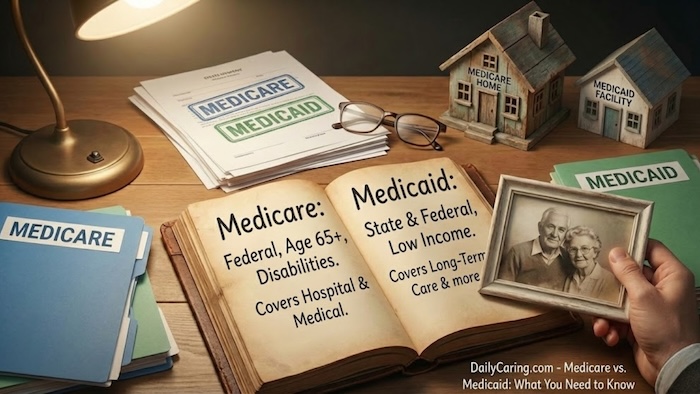
The most important distinction in medicaid vs medicare is the population each program serves.
Medicare is a federal health insurance program primarily designed for:
- Individuals age 65 and older
- Certain younger individuals with disabilities
- Patients with End-Stage Renal Disease (ESRD)
- Individuals with ALS (Lou Gehrig’s disease)
Medicaid, on the other hand, is a joint federal and state program that provides healthcare coverage for low-income individuals and families.
Eligibility for Medicaid depends on factors such as:
- Income level
- Household size
- Disability status
- Pregnancy
- State-specific guidelines
When comparing medicaid vs medicare, another major difference involves program administration. Medicare operates primarily under federal rules, while Medicaid programs vary by state.
Here’s a basic comparison:
| Feature | Medicare | Medicaid |
|---|---|---|
| Program Type | Federal | Federal + State |
| Main Population | Seniors & Disabled | Low-Income Individuals |
| Eligibility Basis | Age/Disability | Income-Based |
| Funding | Federal Government | Federal & State Governments |
| Coverage Variations | Mostly Standardized | Varies by State |
Understanding these distinctions is essential for healthcare providers, billing specialists, and patients navigating insurance options.
Medicare Coverage Explained
To fully understand medicaid vs medicare, it’s important to break down Medicare’s structure.
Medicare consists of several parts:
Medicare Part A
Part A covers:
- Hospital stays
- Skilled nursing facilities
- Hospice care
- Limited home healthcare
Medicare Part B
Part B includes:
- Physician services
- Outpatient care
- Preventive services
- Durable medical equipment
Medicare Part C (Medicare Advantage)
These are private insurance plans approved by Medicare that often combine Parts A and B with additional benefits.
Medicare Part D
Part D provides prescription drug coverage.
One key issue in medicaid vs medicare billing involves understanding which services are covered under specific Medicare parts.
Medical billing professionals must verify:
- Patient eligibility
- Coverage limitations
- Prior authorization requirements
- Deductibles and coinsurance
Medicare reimbursement rates are typically standardized nationwide, making billing somewhat more predictable compared to Medicaid.
However, strict documentation requirements still apply. Incorrect coding or missing medical necessity documentation can lead to denied claims.
Medicaid Coverage and State Variations
Unlike Medicare, Medicaid programs vary significantly from state to state. This is one of the most important factors when analyzing medicaid vs medicare.
Although federal law establishes minimum coverage requirements, states can expand benefits based on local policies and funding.
Medicaid often covers:
- Primary care visits
- Hospital services
- Preventive care
- Long-term care
- Nursing home services
- Behavioral health treatment
- Prescription medications
- Transportation assistance
Some state Medicaid programs also include expanded benefits such as dental care, vision coverage, and home-based support services.
One major distinction in medicaid vs medicare is long-term care coverage. Medicare generally provides only limited short-term skilled nursing coverage, while Medicaid may cover extended nursing home care for qualifying individuals.
Medical billing companies must stay updated on state-specific Medicaid rules because:
- Coverage policies vary
- Reimbursement rates differ
- Prior authorization rules change frequently
- Managed Medicaid plans may have separate requirements
Failure to follow Medicaid billing guidelines can result in denials, audits, or delayed reimbursements.
Eligibility Rules for Medicaid vs Medicare
Eligibility is one of the most misunderstood aspects of medicaid vs medicare.
Medicare Eligibility
Most individuals qualify for Medicare if they:
- Are age 65 or older
- Have received Social Security disability benefits for 24 months
- Have ESRD or ALS
Work history also affects premium eligibility for certain Medicare parts.
Medicaid Eligibility
Medicaid eligibility is based primarily on financial need.
Factors may include:
- Household income
- Family size
- Disability status
- Pregnancy
- Citizenship or immigration status
States that expanded Medicaid under the Affordable Care Act often allow broader eligibility for low-income adults.
Another important issue in medicaid vs medicare is dual eligibility.
Some individuals qualify for both programs simultaneously. These patients are known as dual-eligible beneficiaries.
Dual eligibility can create billing complexities because providers must determine:
- Primary payer responsibility
- Secondary payer obligations
- Coordination of benefits rules
Proper eligibility verification is critical for accurate claims processing.
Medical Billing Challenges in Medicaid vs Medicare
Healthcare providers and billing companies frequently encounter challenges involving medicaid vs medicare claims processing.
Eligibility Verification Errors
Incorrect eligibility verification can result in claim denials or delayed reimbursements.
Prior Authorization Problems
Medicaid managed care plans often require authorizations that Medicare may not.
Coding Differences
Some services may require different billing procedures depending on whether the patient has Medicare or Medicaid coverage.
Coordination of Benefits Issues
Dual-eligible patients create additional billing complexity.
Reimbursement Variations
Medicaid reimbursement rates are often lower than Medicare rates.
Documentation Requirements
Incomplete documentation can trigger audits or payment recoupments.
Medical billing teams should establish strong workflows for handling medicaid vs medicare claims accurately.
Costs and Out-of-Pocket Expenses
Another major difference in medicaid vs medicare involves patient costs.
Medicare Costs
Medicare beneficiaries may pay:
- Monthly premiums
- Deductibles
- Coinsurance
- Copayments
Supplemental insurance plans may help reduce out-of-pocket costs.
Medicaid Costs
Many Medicaid beneficiaries have minimal or no out-of-pocket expenses.
Because Medicaid serves lower-income populations, cost-sharing is generally much lower.
For dual-eligible individuals, Medicaid may help cover Medicare premiums and cost-sharing obligations.
Healthcare providers should educate patients about financial responsibilities to reduce confusion and improve payment collection processes.
Dual Eligibility and Coordination of Benefits
Dual eligibility is one of the most important topics in medicaid vs medicare administration.
Patients eligible for both programs often include:
- Low-income seniors
- Disabled individuals with limited income
- Long-term care residents
For dual-eligible patients:
- Medicare usually acts as the primary payer
- Medicaid often covers secondary costs
Billing teams must understand coordination of benefits procedures to prevent claim rejections.
Dual-eligible billing may involve:
- Crossover claims
- Secondary billing
- Patient responsibility calculations
- Managed care coordination
Improper billing workflows can delay payments and increase administrative costs.
Compliance and Regulatory Considerations
Compliance is essential when managing medicaid vs medicare claims.
Healthcare organizations must follow regulations involving:
- Fraud prevention
- Medical necessity
- Coding accuracy
- Documentation standards
- Patient privacy
- Audit readiness
Government programs closely monitor billing activities to identify improper payments and fraudulent claims.
Common compliance risks include:
- Upcoding
- Duplicate billing
- Incorrect modifier usage
- Billing noncovered services
- Lack of documentation
Medical billing companies should implement regular audits and staff training to maintain compliance.
Strong compliance programs reduce legal risks and improve reimbursement accuracy.
Technology’s Role in Medicaid vs Medicare Billing
Technology has transformed the way providers manage medicaid vs medicare billing operations.
Modern healthcare organizations rely on:
- Electronic health records
- Revenue cycle management software
- Eligibility verification systems
- Claims scrubbing tools
- Automated payment posting
Technology helps reduce manual errors while improving claim submission efficiency.
Artificial intelligence and automation are also improving denial management and payer analysis processes.
However, organizations must ensure systems remain updated with changing payer requirements and coding guidelines.
Best Practices for Managing Medicaid vs Medicare Claims
Healthcare providers and billing companies can improve operational efficiency by following best practices for medicaid vs medicare billing.
Verify Eligibility Before Services
Confirm coverage details before appointments whenever possible.
Maintain Accurate Documentation
Strong documentation supports medical necessity and compliance.
Train Billing Staff Regularly
Frequent education helps staff stay updated on changing regulations.
Monitor Denial Trends
Analyzing denial patterns improves workflow efficiency.
Conduct Internal Audits
Audits help identify compliance risks early.
Improve Patient Communication
Clear financial discussions reduce confusion and billing disputes.
Organizations that proactively manage these processes typically experience better reimbursement outcomes.
FAQs About Medicaid vs Medicare
What is the main difference between Medicaid vs Medicare?
Medicare primarily serves seniors and disabled individuals, while Medicaid provides healthcare coverage for low-income individuals and families.
Can someone have both Medicaid and Medicare?
Yes. Some individuals qualify for both programs and are considered dual-eligible beneficiaries.
Does Medicaid cover long-term care?
Yes. Medicaid often covers long-term nursing home care for eligible individuals.
Does Medicare require monthly premiums?
Many Medicare beneficiaries pay premiums for certain parts of Medicare coverage.
Why is Medicaid billing more complicated?
Medicaid rules vary by state, creating different coverage policies and reimbursement structures.
Why is understanding Medicaid vs Medicare important for billing companies?
Accurate billing helps prevent claim denials, compliance violations, and delayed reimbursements.
Conclusion
Understanding medicaid vs medicare is essential for healthcare providers, billing professionals, and patients navigating the complex healthcare system. Although both programs provide critical healthcare coverage, they operate under different eligibility rules, reimbursement structures, and billing requirements.
For medical billing companies, mastering medicaid vs medicare workflows improves claim accuracy, reduces denials, strengthens compliance, and enhances revenue cycle performance. Proper eligibility verification, documentation, coding accuracy, and payer coordination are all essential components of successful billing operations.
Patients also benefit from understanding the differences between these programs because informed decisions lead to better healthcare access and financial planning.