J Codes: The Ultimate Guide to Accurate Medical Billing
Medical billing is a complex world, and J codes are one of the most essential components for accurate reimbursement. Understanding how to properly use J codes ensures that healthcare providers are reimbursed correctly for drugs and injections administered in outpatient settings.
In this comprehensive guide, we’ll explore the importance of J codes, their role in medical billing, common mistakes, compliance requirements, and expert strategies to maximize revenue and avoid costly denials.
By the end of this article, you’ll understand how to navigate J codes effectively and why accurate coding can make a significant difference in your billing operations.
What Are J Codes and Why They Matter
J codes are a subset of HCPCS Level II codes used primarily for injectable drugs and chemotherapy agents administered in outpatient settings. These codes are critical for accurate billing because they:
-
Identify the specific drug or biological administered
-
Provide detailed information for insurance reimbursement
-
Ensure compliance with federal regulations
-
Support accurate clinical documentation
Categories of J Codes
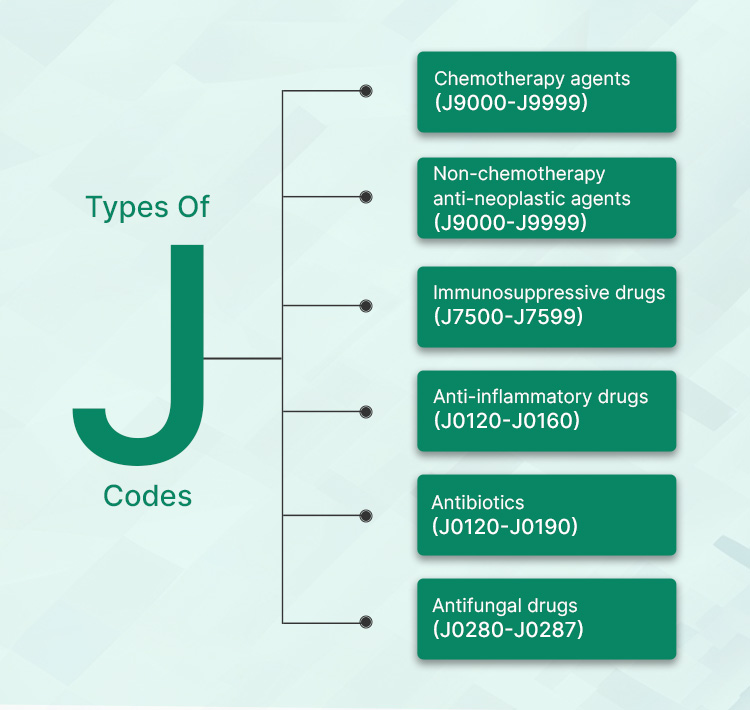
J codes are classified based on drug type, route of administration, and billing requirements. Common categories include:
| J Code Range | Description |
|---|---|
| J0120–J9999 | Prescription drugs, biologics, chemotherapy agents |
| J3490–J3590 | Unclassified or miscellaneous drugs |
| J7600–J9999 | Specific medications with unique billing rules |
Proper assignment of J codes is essential for avoiding claim denials.
How to Properly Use J Codes in Medical Billing
Accurate usage of J codes involves following documentation guidelines and payer rules. Improper coding can result in delays, denials, or even audits.
Step 1: Verify Drug Administration
Before assigning a J code, confirm the following:
-
Drug name and dosage
-
Route of administration (IV, IM, SC, etc.)
-
Quantity and units administered
-
Date of administration
Step 2: Select the Correct J Code
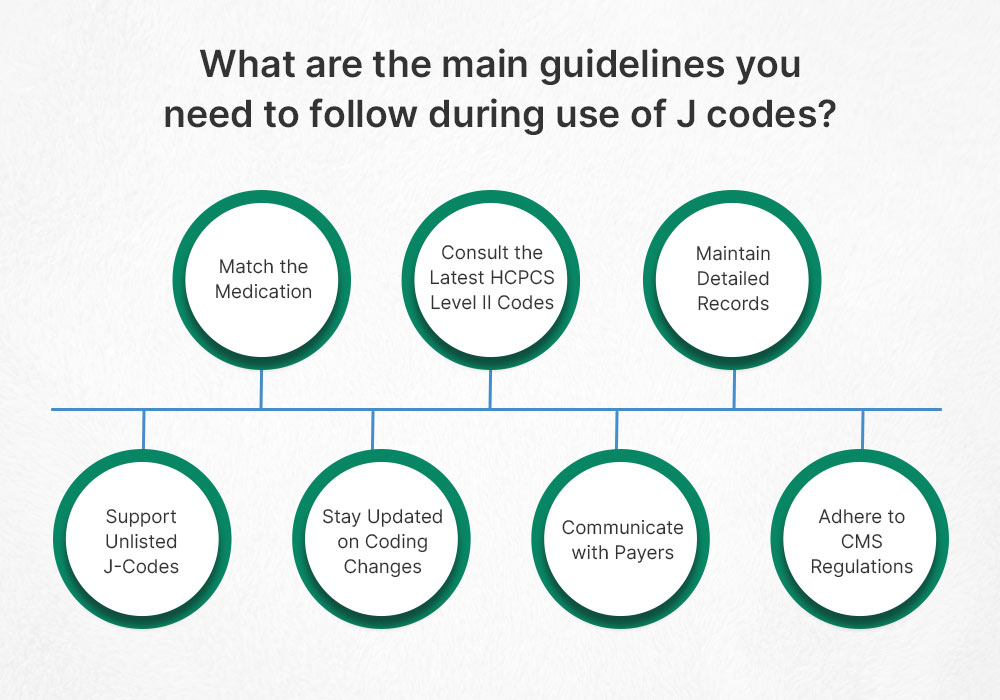
Use the HCPCS Level II coding manual to choose the correct J code. Ensure that:
-
The code corresponds exactly to the drug and dosage
-
The billing units match the amount administered
-
Unclassified codes (e.g., J3490) are used only when no specific code exists
Step 3: Document Properly
Accurate documentation should include:
-
Patient name and date of service
-
Drug name, strength, and quantity
-
Administration route
-
Prescribing physician and medical necessity
Proper documentation is essential for supporting claims and compliance audits.
Common Mistakes with J Codes and How to Avoid Them
Many medical billers encounter errors when coding J codes. Some of the most frequent mistakes include:
-
Using the wrong dosage unit
-
Failing to document route of administration
-
Misusing unclassified J codes
-
Billing drugs not covered by insurance
-
Inaccurate or incomplete documentation
Best Practices to Avoid Errors
-
Cross-check HCPCS coding updates regularly
-
Verify dosage calculations with clinical staff
-
Use electronic health records (EHR) for accurate documentation
-
Conduct regular coding audits
Following these practices ensures claims are processed smoothly and payments are received on time.
J Codes and Reimbursement Challenges
J-codes directly impact reimbursement for outpatient services. Understanding payer policies is crucial for maximizing revenue.
Insurance Coverage and J-Codes
Not all drugs billed with J-codes are covered by all payers. Factors affecting coverage include:
-
FDA-approved indications
-
Off-label use
-
Medical necessity documentation
-
Prior authorization requirements
Role of J-Codes in Compliance
Accurate coding and documentation of J-codes are critical for compliance with CMS guidelines. Incorrect usage can lead to:
-
Audits by payers or CMS
-
Claim denials
-
Overpayment recovery
-
Legal and regulatory penalties
Proper coding demonstrates professional integrity and protects the practice from financial risk.
Advanced Strategies for J-Codes Optimization
For medical billing teams looking to improve efficiency, the strategic use of J-codes is essential.
Training and Education
Ongoing education is vital for keeping billing staff updated with the latest J code rules and payer requirements.
-
Attend coding webinars and workshops
-
Subscribe to HCPCS updates
-
Implement in-house training programs
Leveraging Technology
Billing software and EHR systems can:
-
Automate J code selection
-
Flag inconsistencies in dosage or route
-
Integrate payer rules for real-time compliance
Technology reduces errors and speeds up claim submission.
Collaboration with Clinical Staff
Accurate J code billing requires collaboration between coders and healthcare providers:
-
Ensure clinical notes match billed codes
-
Clarify dosage and drug details with nursing staff
-
Review unusual drug administrations before billing
Collaboration improves claim accuracy and reduces denials.
FAQs About J Codes
What are J-codes used for?
J-codes are used to bill for injectable drugs, chemotherapy, and other biologics administered in outpatient settings.
Can J-codes be used for oral medications?
No, J-codes are specific to drugs administered by injection or infusion.
How do I know which J code to use?
Refer to the HCPCS Level II manual and verify drug name, dosage, and route of administration.
What happens if I use the wrong J code?
Using an incorrect J code can result in claim denials, delayed payments, and potential audits.
Are J codes updated regularly?
Yes, CMS updates HCPCS Level II codes, including J-codes, annually or as needed.
Can J-codes affect insurance reimbursement?
Absolutely. Accurate J coding ensures proper payment and reduces the risk of denied or delayed claims.
Conclusion
Mastering J-codes is essential for accurate medical billing, compliance, and maximizing reimbursement. These codes are more than just numbers—they represent drugs and services that must be billed correctly to ensure healthcare providers are paid promptly.
By following best practices, avoiding common mistakes, leveraging technology, and collaborating with clinical staff, billing professionals can improve efficiency, reduce denials, and safeguard their practice against costly errors.
For professional guidance and reliable billing services, trust Icon Billing LLC to handle your J-codes with precision and expertise.