
Introduction: Understanding Institutional Claims in Medical Billing
In the realm of healthcare billing, institutional claims are an essential aspect of the financial operations of hospitals, clinics, and other healthcare institutions. These claims represent the charges for services provided by institutional providers such as hospitals, skilled nursing facilities, and outpatient clinics. Institutional claims are different from professional claims in terms of their structure, coding, and reimbursement process.
For medical billing professionals, mastering institutional claims is critical for ensuring accurate reimbursement, minimizing claim denials, and streamlining the overall billing process. However, handling institutional claims can come with its own set of challenges, such as navigating complex coding systems and dealing with payer-specific requirements.
This blog post will provide a comprehensive overview of institutional claims—from what they are and how to properly submit them, to common challenges and best practices for improving your claims management process.
What Are Institutional Claims?
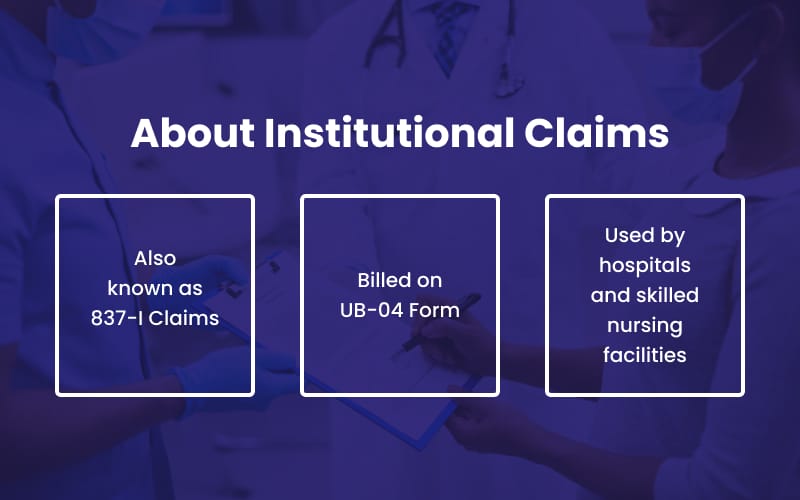
Institutional claims refer to claims submitted by healthcare institutions, like hospitals or nursing homes, for services provided to patients. These claims differ from professional claims, which are submitted by individual healthcare providers, such as physicians. Institutional claims typically use the UB-04 claim form (also known as the CMS-1450), which is designed to capture the details of institutional healthcare services.
Institutional claims are used for a wide variety of services, including:
-
Inpatient hospital care: Services provided when patients are admitted to the hospital.
-
Outpatient care: Services provided to patients who aren’t admitted, such as diagnostic tests and surgeries.
-
Skilled nursing facility care: Care provided in nursing homes or rehabilitation centers.
-
Home health services: Care provided at a patient’s home for those recovering from illness or surgery.
Why Are Institutional Claims Important?
Institutional claims are crucial for healthcare providers and institutions as they represent the primary method for receiving reimbursement for services rendered to patients. Properly managing these claims ensures that healthcare facilities are compensated for the care they provide, which is essential for maintaining financial health and continuing operations. The process of submitting and processing institutional claims can be complex, but understanding the importance of these claims is the first step toward improving accuracy and efficiency.
The accuracy of institutional claims can directly affect a healthcare facility’s cash flow. If claims are filed incorrectly or denied, it can result in delayed payments, increased administrative workload, and, in some cases, legal complications. Therefore, getting the institutional claims right from the start is essential to the financial success of any healthcare provider.
Common Challenges with Institutional Claims
Despite their importance, institutional claims often face a number of challenges. These challenges can lead to claim denials, delayed reimbursements, and overall frustration for both healthcare providers and billing professionals.
1. Complex Coding Systems
Institutional claims use complex coding systems to describe the services provided. These systems include ICD-10 codes (diagnosis codes), CPT codes (procedure codes), and HCPCS codes (healthcare common procedure coding system). Accurate coding is essential to ensure that institutional claims are processed correctly. Incorrect or missing codes can result in claim denials, delayed payments, or even audits.
2. Payer-Specific Requirements
Every insurance payer (e.g., Medicare, Medicaid, private insurers) has its own set of rules and requirements for submitting institutional claims. These rules can include specific billing codes, documentation requirements, or deadlines for submission. Failing to comply with these payer-specific requirements can lead to significant delays or denials of reimbursement.
3. Incomplete or Inaccurate Documentation
For institutional claims to be processed correctly, complete and accurate documentation is essential. This includes patient demographics, medical records, physician orders, and supporting documents that validate the services provided. Missing or incomplete documentation is one of the most common reasons for claim denials in institutional billing.
4. Coordination of Benefits (COB) Issues
In cases where a patient has multiple forms of insurance (e.g., Medicare and a secondary private insurance), properly coordinating benefits can be a significant challenge. Incorrect coordination of benefits can lead to incorrect payments or denials of claims, especially if the primary payer is not identified correctly.
5. Billing for Non-Covered Services
Another challenge with institutional claims is ensuring that only covered services are billed. Some services may not be covered by insurance, and submitting claims for these services can result in denials or overpayment requests. Healthcare institutions need to have robust processes in place to verify coverage before submitting institutional claims.
Best Practices for Handling Institutional Claims
While managing institutional claims can be challenging, adopting best practices can significantly improve your billing process, reduce denials, and increase reimbursement rates. Here are some effective strategies to optimize your institutional claims management:
1. Implement Robust Coding Procedures
Accurate coding is the foundation of a successful institutional claims process. It’s essential to ensure that coders are up-to-date on the latest coding guidelines and payer-specific requirements. Regular training and audits can help catch errors early and reduce the likelihood of claims being denied due to incorrect or missing codes.
2. Use Advanced Billing Software
Investing in advanced billing software can streamline the institutional-Claims process. These systems help automate many aspects of billing, including coding, claim generation, and tracking. With integrated systems, you can minimize human error and ensure that claims are submitted promptly and accurately.
3. Prioritize Documentation Accuracy
Accurate documentation is crucial for supporting your institutional-claims. Ensure that all necessary patient information, diagnoses, procedures, and supporting documentation are correctly included in the claim. Implement a system of checks and balances to verify that all required documents are attached before submission.
4. Stay Updated on Payer Guidelines
Since different payers have different requirements, it’s critical to stay informed about each payer’s policies. Regularly check payer websites, and sign up for updates or alerts on changes to billing guidelines. Ensuring that your team is always up-to-date will help reduce the chances of non-compliance or denial.
5. Use an Effective Claims Follow-Up System
Once a claim is submitted, it’s important to have a system in place to track and follow up on claims. Monitor the status of each claim and take proactive steps to resolve any issues that arise. An effective follow-up system can help ensure that claims are processed quickly and payment delays are minimized.
6. Ensure Proper Coordination of Benefits
When dealing with patients who have multiple forms of insurance, it’s essential to properly coordinate benefits. Ensure that the correct primary and secondary payers are identified and that all necessary documentation is submitted to avoid errors in payment allocation.
Positive Impact of Institutional-Claims on Healthcare Providers
When handled correctly, institutional-claims can have a positive impact on healthcare providers in several ways:
-
Faster Reimbursement: By submitting accurate and complete institutional-claims, healthcare providers can expect faster and more reliable reimbursement from payers.
-
Improved Cash Flow: Timely and accurate claims result in quicker payment, improving cash flow and reducing financial stress on healthcare institutions.
-
Lower Denial Rates: Proper documentation and coding can significantly reduce the chances of claims being denied, which in turn reduces the amount of time spent on appeals and re-submissions.
-
Stronger Provider-Payer Relationships: Accurate and efficient claim submissions lead to better relationships with payers, which can translate into fewer claim disputes and smoother interactions.
Negative Aspects of Institutional-Claims
While institutional-claims are essential for the financial health of healthcare providers, there are some negative aspects to consider:
-
Complexity: The complexity of coding and payer-specific requirements can make institutional-claims difficult to manage, especially for large healthcare facilities with diverse services.
-
High Denial Rates: Due to the intricate nature of institutional-claims, they are often subject to higher denial rates than professional claims. This can lead to additional administrative costs and resources spent on resubmissions.
-
Delayed Payments: Errors in claims submission or disputes over payments can cause significant delays in reimbursement, affecting the provider’s cash flow and financial stability.
Conclusion: Navigating the Complex World of Institutional-Claims
Managing institutional-claims is a challenging but necessary part of healthcare billing. While it requires careful attention to detail, the benefits of properly processed institutional-claims—such as accurate reimbursement, improved cash flow, and reduced claim denials—are undeniable. By implementing best practices such as accurate coding, comprehensive documentation, and effective follow-up systems, healthcare providers can streamline their claims process and ensure timely reimbursement.
At Icon Billing LLC, we specialize in helping healthcare providers navigate the complexities of institutional-claims. If you’re looking to optimize your billing process, reduce denials, and ensure compliance, contact us today for expert advice and support.