7 Powerful Truths About aapc That Can Make or Break Your Medical Billing Career
Medical billing and coding is no longer just a back-office function—it’s the backbone of a financially healthy healthcare practice. If you’re in this field, you’ve probably heard that aapc can shape your entire career path. But is it really that important? Absolutely. Understanding what aapc is, why aapc matters, and how to leverage aapc credentials can mean the difference between steady growth and frustrating stagnation.
At Icon Billing LLC, we’ve worked with providers, coders, and billing professionals who’ve seen firsthand how certification influences trust, compliance, and revenue. In this comprehensive guide, we’ll break down everything you need to know—from the real benefits to the hidden pitfalls—so you can make informed decisions with confidence.
What Is aapc and Why It Matters in Medical Billing
The first truth is simple but powerful: aapc stands for credibility in the healthcare revenue cycle industry. Originally founded as the American Academy of Professional Coders, aapc has grown into one of the most recognized certification bodies for medical coders, billers, auditors, and compliance professionals.
Over the years, aapc has expanded its reach globally, offering certifications, training programs, networking chapters, and continuing education. Employers across hospitals, private practices, and revenue cycle management companies actively seek professionals who hold credentials from this organization. Why? Because AAPC offers structured standards and measurable competence.
Earning an aapc certification demonstrates that you understand:
-
CPT, ICD-10-CM, and HCPCS coding systems
-
Compliance and regulatory guidelines
-
Medical documentation standards
-
Ethical billing practices
Professionals who complete training through aapc programs often develop stronger analytical skills and a deeper understanding of payer policies. That translates directly into fewer claim denials and improved reimbursement rates.
Many employers view aapc credentials as proof that a candidate isn’t just guessing their way through codes. Instead, they’ve committed to mastering industry standards. In a field where even small coding errors can cost thousands of dollars, that distinction is critical.
Simply put, if you’re serious about building a stable and respected career in medical billing, understanding how aapc fits into the bigger picture is essential.
Why aapc Certification Can Make or Break Your Career
Here’s the second powerful truth: holding an aapc credential can dramatically increase your earning potential—but ignoring it can limit your growth.
An aapc credential signals expertise. Employers often use certification as a filtering tool when hiring. If two candidates have similar experience, but one holds certification and the other does not, the certified professional frequently gets the offer.
Why does this matter so much?
Because aapc exams are known for being rigorous. They test not only knowledge of coding systems but also the ability to apply guidelines correctly in real-world scenarios. That depth of evaluation builds employer trust.
When you prepare for an aapc exam, you’re forced to sharpen your:
-
Code selection accuracy
-
Understanding of medical terminology
-
Compliance awareness
-
Time management skills
Staying active within the aapc community also requires continuing education units (CEUs). That means certified professionals stay updated on changing regulations, new coding updates, and policy revisions.
Healthcare regulations shift constantly. Insurance rules evolve. Documentation requirements tighten. Professionals with an aapc certification are often better prepared to adapt to those changes quickly.
However, here’s the flip side—the negative truth. Simply obtaining certification isn’t enough. If you earn it but fail to maintain it, or don’t apply the knowledge correctly, your advantage disappears. Certification should be part of an ongoing commitment to excellence, not just a resume booster.
At Icon Billing LLC, we’ve seen certified professionals dramatically improve denial rates and compliance audits. We’ve also seen those who underestimated its value struggle to advance. The difference? Consistency and application.
How to Get Started with aapc the Right Way
The third truth is empowering: joining aapc is straightforward—but succeeding requires strategy.
First, you’ll need to join aapc as a member. Membership provides access to study materials, practice exams, networking chapters, and updates. Once enrolled, explore the different aapc certifications available.
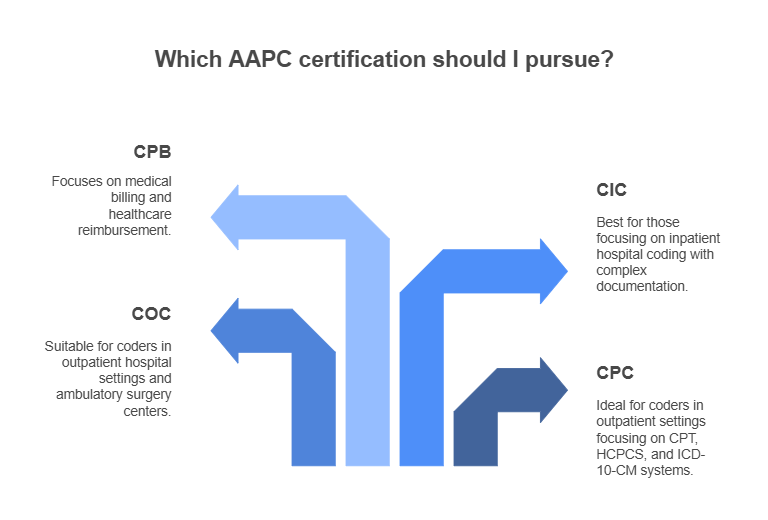
The most popular aapc credential for coders is the Certified Professional Coder (CPC). It focuses heavily on physician-based coding. Another respected aapc option is the Certified Professional Biller (CPB), which concentrates more on claim submission, reimbursement, and payer interaction.
Before registering for an aapc exam, consider:
-
Your current experience level
-
Your long-term career goals
-
Whether you prefer hospital or physician-based coding
-
Your learning style
Many students choose aapc-approved training courses to prepare effectively. These courses can be taken online or in structured classroom settings.
Preparation isn’t just about memorizing codes. It’s about understanding guidelines, identifying documentation gaps, and applying logic under time pressure. Practice exams help simulate real conditions and improve confidence.
After passing your aapc exam, your journey doesn’t stop. You’ll need to earn CEUs regularly to maintain your credential. Attending webinars, conferences, and local chapter meetings can help you stay ahead of the curve.
For additional regulatory updates and compliance information, you can also refer to the Centers for Medicare & Medicaid Services (CMS) website at https://www.cms.gov. Staying informed from authoritative sources strengthens your professional foundation.
Success with certification isn’t accidental. It’s intentional.
Common Mistakes Professionals Make With Certification
Let’s be honest—many professionals misunderstand what certification truly represents. Some believe that once they pass an exam, their work is done. That mindset can be risky.
A frequent mistake is relying solely on memorization rather than comprehension. Coding requires interpretation. Payer policies vary. Documentation differs between specialties. Without critical thinking skills, even certified professionals can make costly errors.
Another mistake is failing to network. Local chapters offer opportunities to discuss case studies, audit findings, and industry trends. Professionals who isolate themselves miss out on collaborative learning.
Time management during exams is another challenge. Preparation should include timed practice sessions. Confidence under pressure is just as important as knowledge.
Finally, some professionals overlook ethics. Billing compliance isn’t optional—it’s mandatory. Even small oversights can trigger audits or penalties. Strong ethical foundations separate average billers from exceptional ones.
Certification is powerful—but only when paired with diligence and responsibility.
How Icon Billing LLC Supports Certified Professionals
At Icon Billing LLC, we understand that healthcare providers rely on precise billing for financial stability. That’s why we value aapc-certified professionals within our organization.
We encourage our team to maintain aapc memberships and pursue continuing education. Doing so ensures we remain aligned with evolving industry standards and payer requirements.
Our internal processes are designed to reflect best practices and align with aapc guidelines. That commitment translates into:
-
Reduced claim denials
-
Improved reimbursement turnaround
-
Stronger compliance safeguards
-
Greater provider confidence
When clients partner with us, they’re not just outsourcing billing. They’re investing in a team that understands certification standards and applies them practically.
Experience matters. Expertise matters. Authority matters. And trust? That’s everything.
We combine real-world billing experience with certified knowledge to create measurable results. It’s not just theory—it’s daily practice.
Frequently Asked Questions
Is certification necessary for medical billing?
While not legally required, certification significantly improves job prospects, credibility, and earning potential.
How long does it take to prepare for certification exams?
Preparation time varies, but most candidates spend several months studying and practicing before attempting the exam.
Does certification guarantee a job?
No certification guarantees employment, but it dramatically strengthens your candidacy and professional standing.
Are continuing education units mandatory?
Yes, maintaining credentials requires ongoing education to ensure professionals stay updated with industry changes.
Can beginners pursue certification?
Absolutely. Many entry-level professionals begin their careers by enrolling in training programs before gaining work experience.
Is certification recognized nationwide?
Yes, credentials are widely respected across healthcare organizations, billing companies, and private practices.
Conclusion: The Powerful Decision That Shapes Your Future
Here’s the final truth: choosing whether to pursue certification is a defining moment in your medical billing journey. It can open doors to leadership roles, specialized auditing positions, and higher compensation. Or, if ignored, it can quietly limit advancement opportunities.
Certification represents more than passing an exam. It symbolizes commitment, accountability, and professional integrity.
At Icon Billing LLC, we’ve witnessed the transformative impact certified professionals bring to healthcare organizations. When billing is accurate and compliant, providers thrive. When providers thrive, patient care improves.
If you’re serious about building a stable, respected, and rewarding career, don’t treat certification as optional. Treat it as essential.
Your future in medical billing isn’t just about codes—it’s about credibility, confidence, and continuous growth.