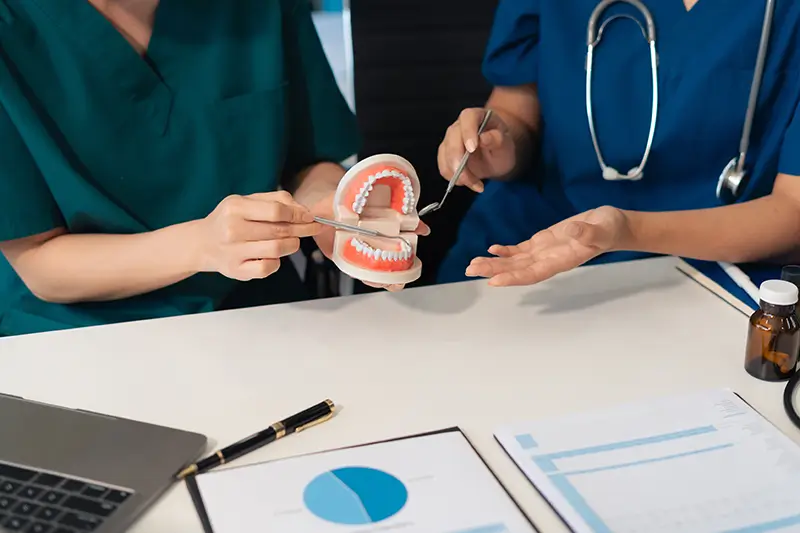
Dental billing is the specialized process of submitting and managing insurance claims for dental procedures. Unlike general medical billing, it relies on a unique set of codes and documentation requirements tailored specifically to oral health services. This process ensures that dental practices maintain a healthy cash flow while helping patients maximize their insurance benefits.
Accurate coding is the backbone of dental billing. We utilize the most current Current Dental Terminology (CDT) codes to ensure that every procedure—from routine prophylaxis to complex oral surgeries—is reported correctly. This precision reduces the likelihood of claim rejections and ensures strict compliance with American Dental Association (ADA) standards.
To avoid financial surprises for patients, we manage the pre-determination process. By submitting proposed treatment plans to insurance payers before work begins, we secure a formal estimate of coverage. This allows the practice to discuss out-of-pocket costs with patients upfront, significantly increasing treatment acceptance rates.
Our team monitors every claim from submission to final payment. In the event of a denial, we handle the complex appeals process, providing necessary clinical narratives, X-rays, and periodontal charting to justify the medical necessity of the procedure. This persistent follow-up ensures that your practice captures all rightful revenue.
Custom billing plans tailored to your practice size and specialty. We adapt to your workflow, whether you're a solo provider or a multi-location clinic.
End-to-end patient billing and communication services. From verifying benefits to resolving billing questions — we handle it all with care.
CDT (Current Dental Terminology) codes are used specifically for dental procedures and are maintained by the ADA. CPT (Current Procedural Terminology) codes are used for medical services. While some oral surgeries can be billed via CPT to medical insurance, most dental work requires CDT.
Yes. Procedures related to trauma, sleep apnea appliances, or certain biopsies are often eligible for medical insurance coverage. We help identify these opportunities to save the patient’s dental "max" for other treatments.
Insurance payers often require "proof of necessity" for high-cost procedures like crowns, bridges, or scaling and root planing. Including high-quality digital attachments and a clear clinical narrative prevents the common "missing information" denial.
Coordination of benefits can be tricky when a patient has two dental plans. We accurately track which plan is primary and which is secondary to ensure that claims are filed in the correct order and that total payments do not exceed the allowed amounts.
An Explanation of Benefits (EOB) is the document sent by the insurer explaining what portion of the claim was paid, what was adjusted (written off), and what the patient is responsible for paying.